
SIDEBAR
By Atty. Ephraim Cortez
(Updated: 10/26/26; 7:58 am)
Libel and cyber libel are being weaponized to intimidate journalists and undermine press freedom.
Late last week, Pulong Duterte filed a criminal complaint for cyber libel naming several journalists among the respondents. He filed the criminal complaint in Davao City. A few days later, a Davao City court issued a warrant of arrest for cyber libel, and veteran journalist Philip Lustre was arrested.These charges appear to be fabricated and intended to intimidate journalists.
Mr. Lustre’s case exemplifies a fabricated charge and should raise concerns about the actions of both the prosecutor’s office and the court.
Some argue that the Court is not at fault for issuing the warrant of arrest, as it is a procedural step, and is automatically issued, after the case is raffled. However, both the prosecutor’s office and the Court share responsibility.
It appears that Mr. Lustre was not given the opportunity to participate in the Preliminary Investigation. The investigating prosecutor proceeded without proof that Mr. Lustre was properly notified via subpoena. This raises concerns about whether respondents are properly served at their address. In Mr. Lustre’s case, as a prominent journalist based in Metro Manila, authorities knew where to serve the warrant, making the lack of subpoena service particularly concerning.
This practice, of proceeding with the investigation whether the respondent received the subpoena or not, is highly irregular and violates the due process rights of the respondent.
As regards the issuing Judge, the 1987 Constitution’s provision is clear and unambiguous. Art. III, Sec. 2 requires that “no search warrant or warrant of arrest shall issue except upon PROBABLE CAUSE to be DETERMINED PERSONALLY BY THE JUDGE AFTER EXAMINATION UNDER OATH OR AFFIRMATION OF THE COMPLAINANT AND THE WITNESSES HE MAY PRODUCE, and particularly describing the place to be searched and the persons or things to be seized” (emphasis supplied). Section 6(a), Rule 112 requires that within ten days after a criminal case is raffled to a court, the Presiding Judge evaluate the prosecution’s resolution and the supporting evidence. Based on the Judge’s personal evaluation, he may “immediately dismiss the case if the evidence on record clearly fails to establish probable cause. If he finds probable cause, he shall issue a warrant of arrest”. In the exercise of his discretion whether to issue a warrant of arrest or not, the Judge is required that:
“x x x before issuing a warrant of arrest, must satisfy himself that based on the evidence submitted there is sufficient proof that a crime has been committed and that the person to be arrested is probably guilty thereof.’” (Doris Tereso Ho vs. People of the Philippines, G.R. No. 106632, Oct. 9, 1997)
Warrants of arrest are not automatically issued upon filing of the criminal Information. It may only be issued if there is probable cause to justify such issuance. If there is no probable cause, the judge may end the litigation there. The Supreme Court’s admonition in Salonga vs. Cruz Pano guides our Courts in resolving issues of probable cause. The Supreme Court ruled in Salonga vs. Cruz Pano (G.R. No. L-59524, Feb. 18, 1985) that:
“It is imperative upon the fiscal or the judge, as the case may be, to relieve the accused from the pain of going through a trial once it is ascertained that the evidence is insufficient to sustain a prima facie case or that no probable cause exists to form a sufficient belief as to the guilt of the accused.”
Fabricated charges persist when duty bearers, including police, prosecutors, and judges, allow them to proceed. Such cases advance through the justice system only when the investigating prosecutors find probable cause and the Court allows them to proceed, despite their questionable basis.
Libel and cyberlibel are increasingly used to intimidate journalists and restrict free expression and press freedom. The use of libel and cyber libel against journalists becomes more lethal and chilling when justice system officials fail to follow proper procedures, whether intentionally or not, allowing trumped up cases to prosper.
This is not about the possibility of the “accused” being acquitted after trial on the merits. The issue boils down to exposing an innocent man to the rigors of a full-blown trial when it can be nipped in the bud at the very start. According to the Supreme Court, the right to be free includes protection against arbitrary arrest and against “unwarranted and vexatious prosecution”. As such, Judges and Prosecutors were enjoined “to relieve the accused from the pain of going through a trial once it is ascertained that the evidence is insufficient to sustain a prima facie case or that no probable cause exists” (Salonga vs. Cruz Pano). The Supreme Court further ruled:
“The judge or fiscal, therefore, should not go on with the prosecution in the hope that some credible evidence might later turn up during trial for this would be a flagrant violation of a basic right which the courts are created to uphold.”
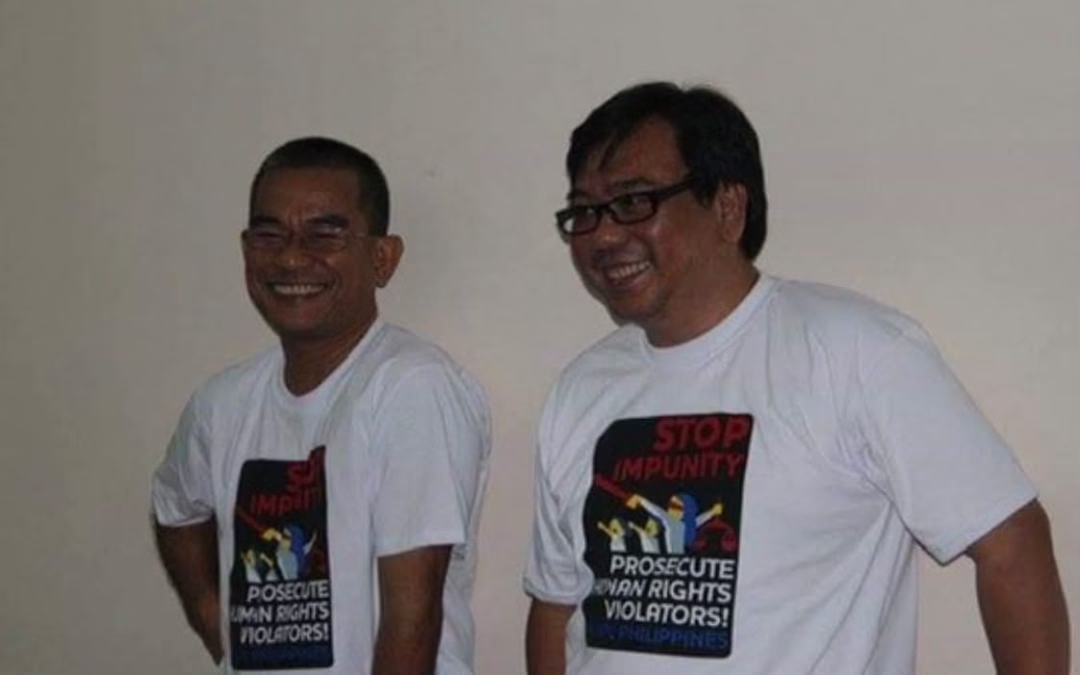
Photo credit: Mr Gil Nartea from Mr Philip Lustre Jr’s Facebook account
=======================================
The views and opinions expressed in this post are the personal views and opinions of the author and do not necessarily express the views and opinions of the organizations he is part of.