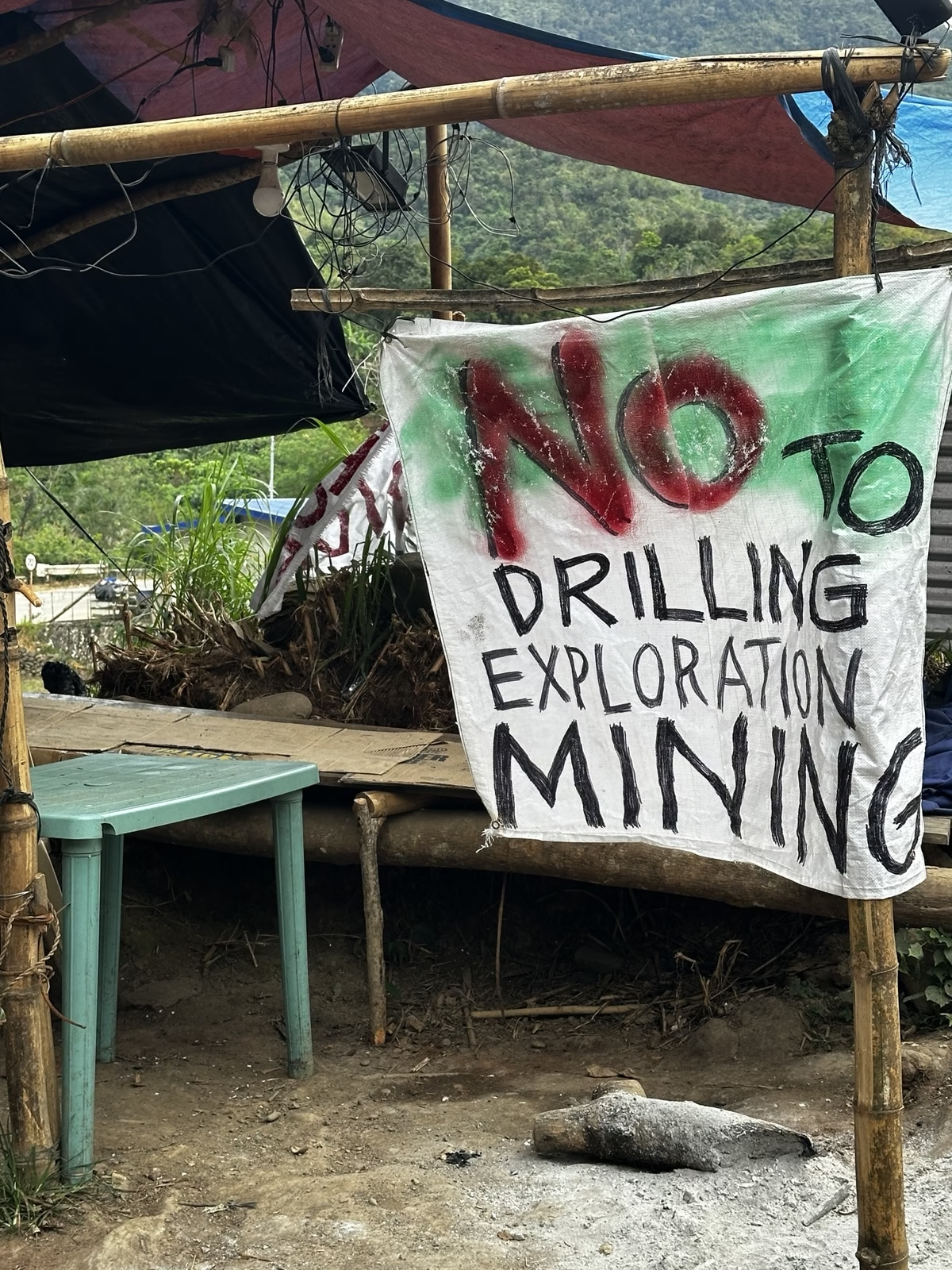
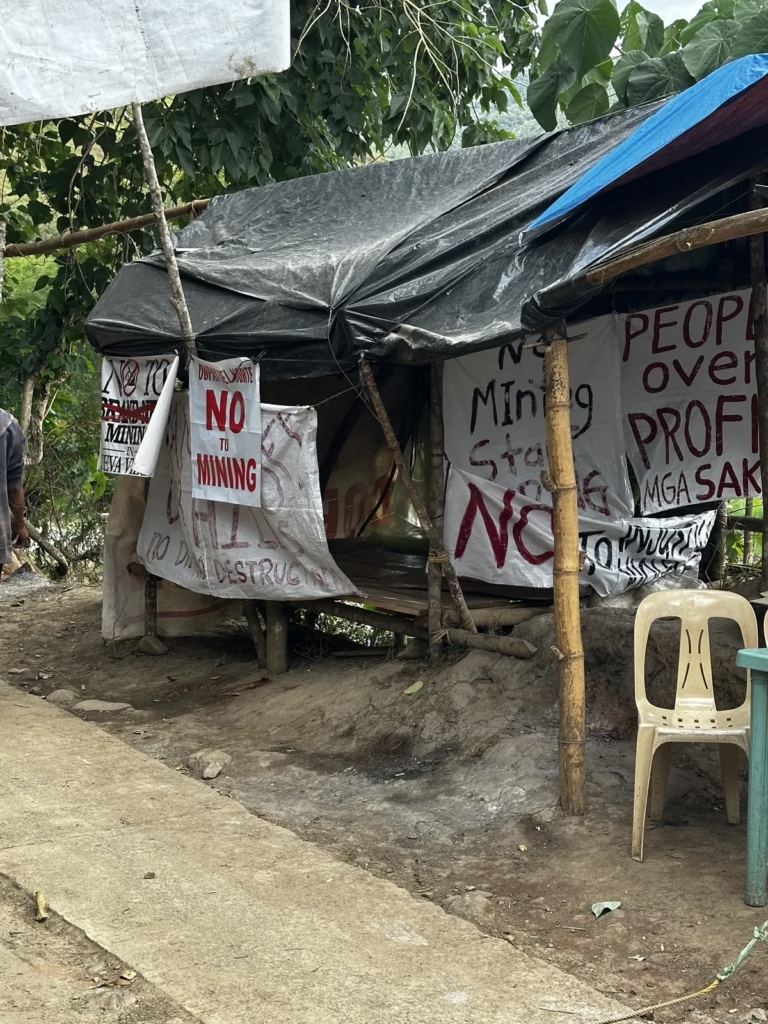
We cautiously note the Mines and Geosciences Bureau’s (MGB) 5 February 2026 decision to temporarily suspend the Exploration Permit issued to Woggle Corporation. For the people of Barangay Bitnong in Dupax del Norte who have spent months at the barricades, this is no small relief. As drilling pauses, the community is, for now, spared the constant noise and disruptive intrusion of heavy machinery into their farms and homes.
That said, we take serious exception to the way the suspension is justified.
The Order anchors the temporary suspension on “force majeure,” pointing to the “barricades and blockades” maintained by residents as a situation beyond the permit holder’s reasonable control. In effect, the community’s collective action is being treated as an extraordinary event independent of human will.
Force majeure, however, is not merely a description of difficulty on the ground. It is a legal standard traditionally reserved for unforeseeable or unavoidable occurrences that make compliance with an obligation impossible in the normal manner. In Philippine jurisprudence, when an event is partly the result of a party’s participation, neglect, or failure to act, it is “humanized” and removed from the ambit of force majeure. A party cannot help create a situation and then invoke it as an act of God.
What has happened in Bitnong is not a bolt from the blue. It is the foreseeable social consequence of pressing ahead with a highly contested exploration project—one that residents have opposed from the outset because it was never the subject of genuine prior consultation, seeks to use a privately owned access road without the owner’s consent, and encroaches on areas identified as watershed and forest reserve.
When residents stand on their own road and refuse entry to a mining firm, they cannot be regarded as an inexplicable supervening event beyond anyone’s control. They are asserting, in concrete terms, that a project forced through over their objections and onto their lands cannot honestly be said to enjoy their consent, much less any social license.
The Supreme Court itself has warned against dressing up disputes with surface owners and host communities as force majeure. In Maximo Awayan v. Sulu Resources Development Corporation, the Court refused to accept a mining contractor’s claim that conflict with surface owners was a force majeure event, noting that the company had failed to use available remedies or act with diligence. Mining companies are expected to deal fairly and promptly with affected landholders; they cannot ignore or mishandle these obligations and then reclassify the resulting resistance as an act of nature.
It is in this light that the MGB’s framing is deeply concerning. By calling the community resistance “force majeure,” the order mischaracterizes the conflict and, at the same time, legitimizes the exploration permit itself. Under the existing regulatory scheme, a finding of force majeure may operate as a “valid reason” that excuses non-compliance and tolls the running of the two-year term of the permit. In practice, this can extend the life of a contested permit and place Woggle in a better position to resume exploration once the supposed “force majeure conditions” are declared to have ceased, instead of prompting the more fundamental inquiry: given its alleged defects, should the permit exist at all?
Equally telling is what the order does not say. It is silent on the residents’ pending petition for cancellation of the exploration permit and the serious grounds they raised: the absence of genuine consultation with the communities; the lack of written consent from surface owners; the private character of the access road Woggle seeks to use; the lack of prior approval and endorsement from the concerned sanggunians; and the encroachment into areas identified as watershed forest reserves, which the Mining Act itself purports to place beyond the reach of mining applications.
The Mining Act is not a neutral or just framework. It has long been criticized for privileging extractive interests over communities and ecosystems. But even on its own terms, Woggle’s permit presents serious questions that the MGB has yet to confront. The proper regulatory response is not to “pause and toll” on the theory that the community’s organized, rights-based resistance is the problem. It is to decide, openly and on the record, whether this permit should ever have been issued and whether it can lawfully be maintained.
It should not have taken months of barricades, police dispersals, and arrests before the MGB intervened. When it finally did, it should have addressed the infirmities of the permit, instead of implying that residents are the source of threats to “public safety, peace, and order.” What unsettles public order in Bitnong is not people standing their ground on their own land, but the insistence on imposing an extractive project over a watershed and a living community without honoring basic demands for self-determination and ecological protection. The people of Dupax del Norte are rights-bearing citizens whose resistance has exposed—not caused—the defects of Woggle’s project and the failures of our mining regime.
The temporary suspension of Woggle’s permit should prompt a reckoning within the MGB through a transparent resolution of the petition and a serious examination of how a permit so plainly at odds with community opposition and ecological realities was issued at all. ###
Reference:
Atty. Josalee S. Deinla
NUPL Secretary General
+639174316396