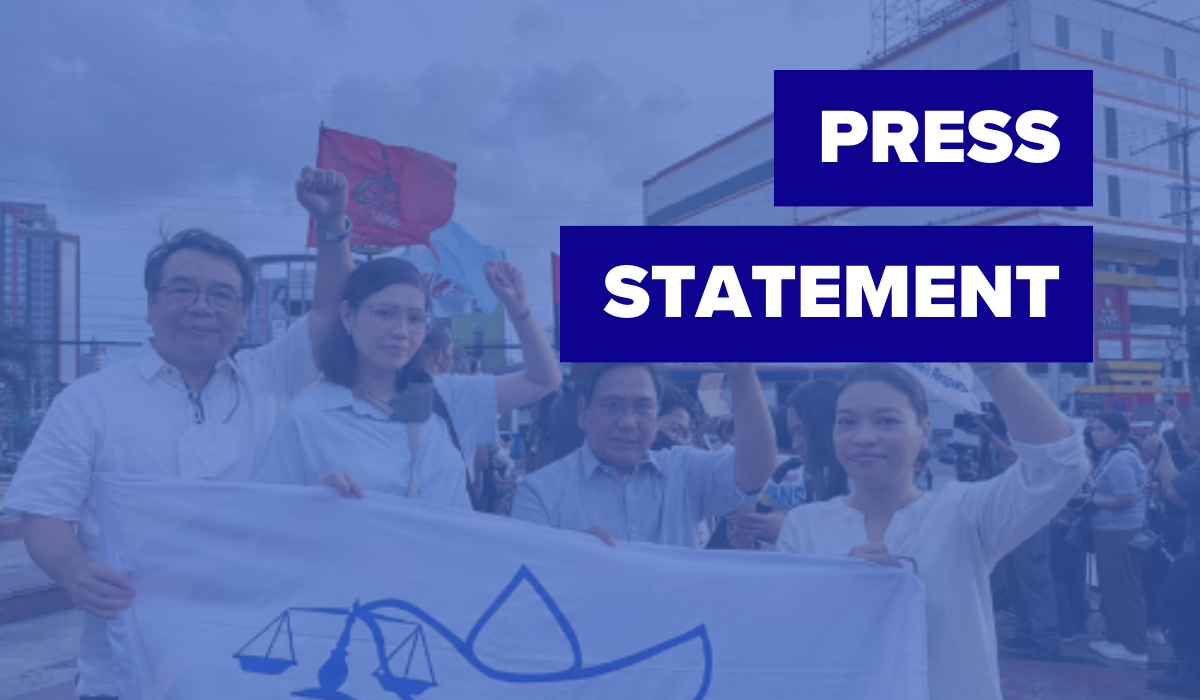
Press Statement
25 February 2026
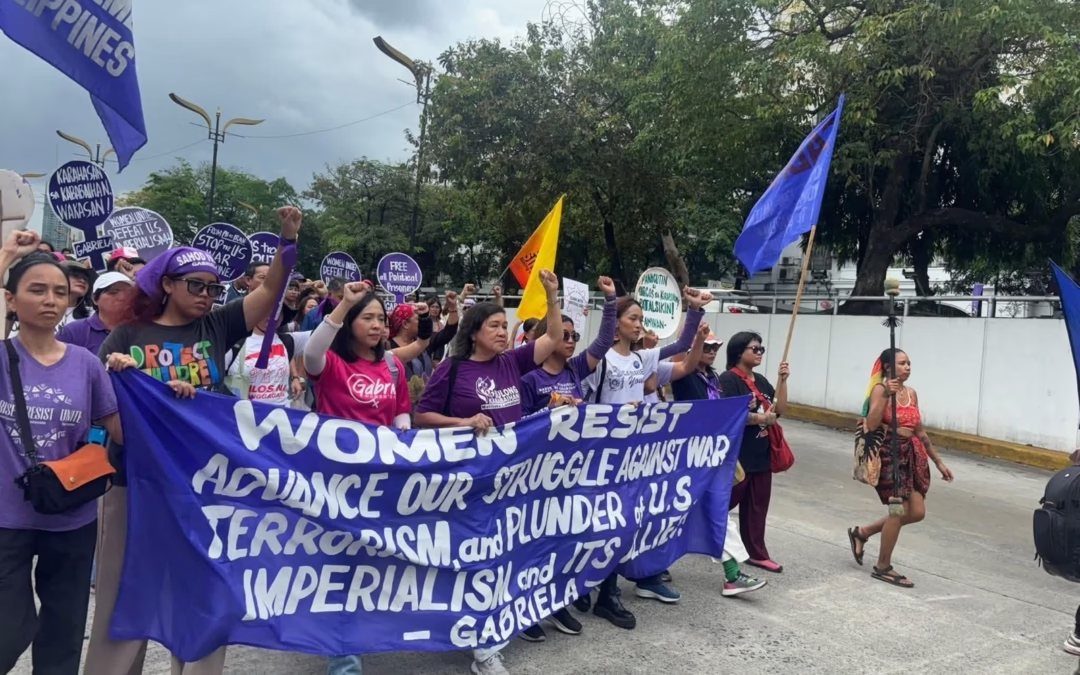
Filipinos who seek to protest corruption are now being told that EDSA is a “no-rally zone,” and that public assemblies conducted without prior permits may be dispersed.
Forty years after the People Power of 1986, the issue cannot be reduced to whether the exercise of freedom of assembly may be conditioned on the issuance of permits. The deeper question is what EDSA signifies within the constitutional order it helped bring into being.
EDSA is not an ordinary thoroughfare. It is inseparable from a defining moment when citizens occupied public space to confront corruption and authoritarian rule. Closing this space to peaceful assembly alters its meaning and suggests that while memory may be preserved, participation may be regulated into insignificance.
The present protests arise from serious allegations of systemic corruption in the use of public funds, including impeachment complaints against President Ferdinand Marcos Jr. that have been summarily dismissed in the House of Representatives. In such circumstances, where formal mechanisms of accountability appear constrained, public assembly assumes heightened importance. The right exists precisely for moments when citizens seek to question those who govern in their name.
A framework that conditions protest on prior permission places public scrutiny under the authority of the very State apparatus subject to scrutiny. This configuration of authority is difficult to reconcile with a constitutional order founded on the principle that sovereignty resides in the people and that public office is a public trust.
EDSA at 40 measures our fidelity to the commitments made in 1987. The constitutional order born of People Power was designed to prevent a return to a system in which dissent survives only by official leave. If the site that once embodied popular sovereignty is declared off-limits to peaceful dissent, history edges toward a pattern the Constitution sought to end, and EDSA is diminished to commemorative ritual.
The enduring significance of EDSA rests on a simple truth: public spaces belong to the people. They must remain open as platforms for public discourse—robust, uninhibited, and free from the chilling effect of threats of dispersal or prosecution under a statute born of martial rule. EDSA stands as the people’s forum when they demand accountability and seek the fulfillment of the promise of People Power.