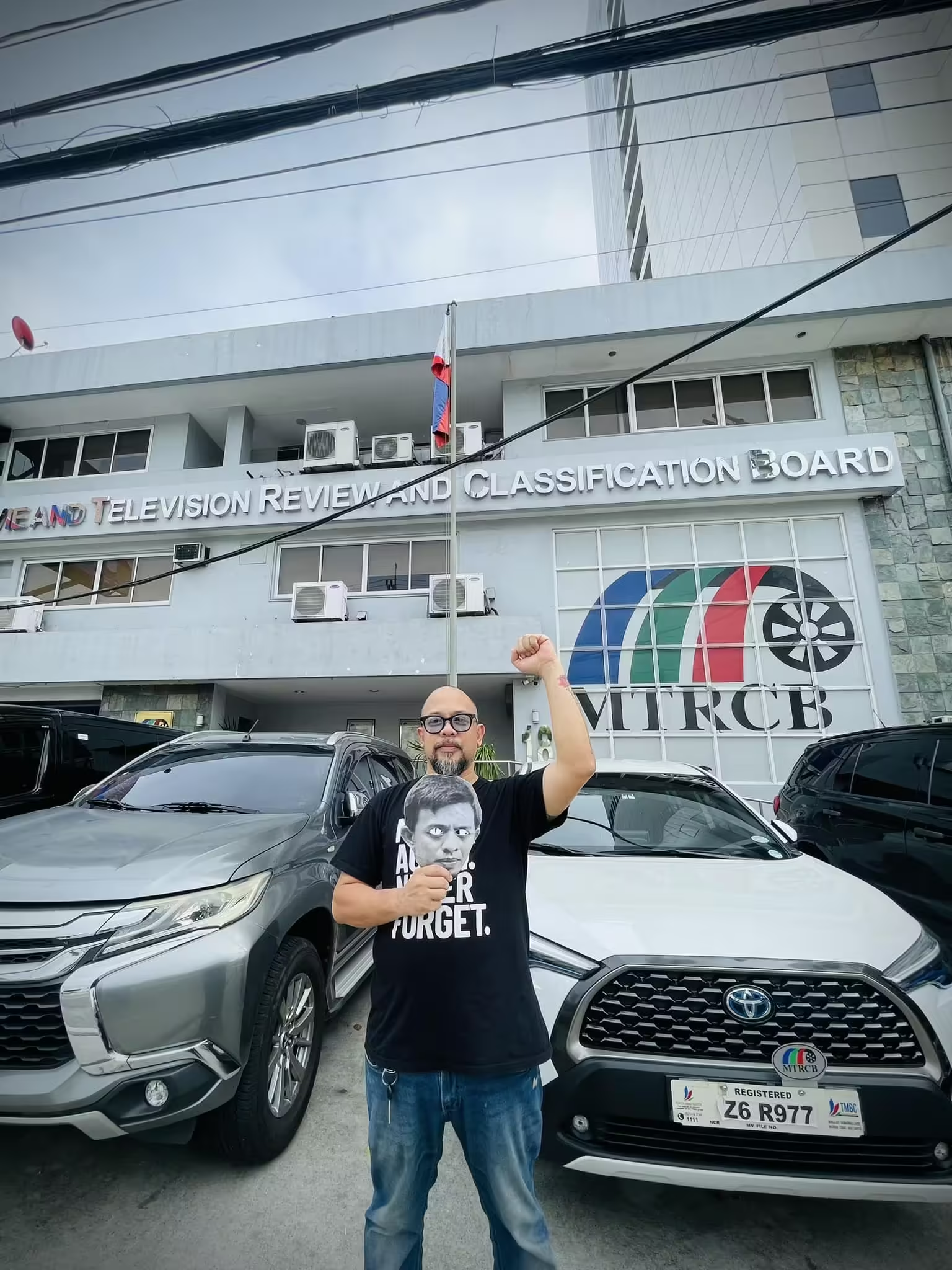
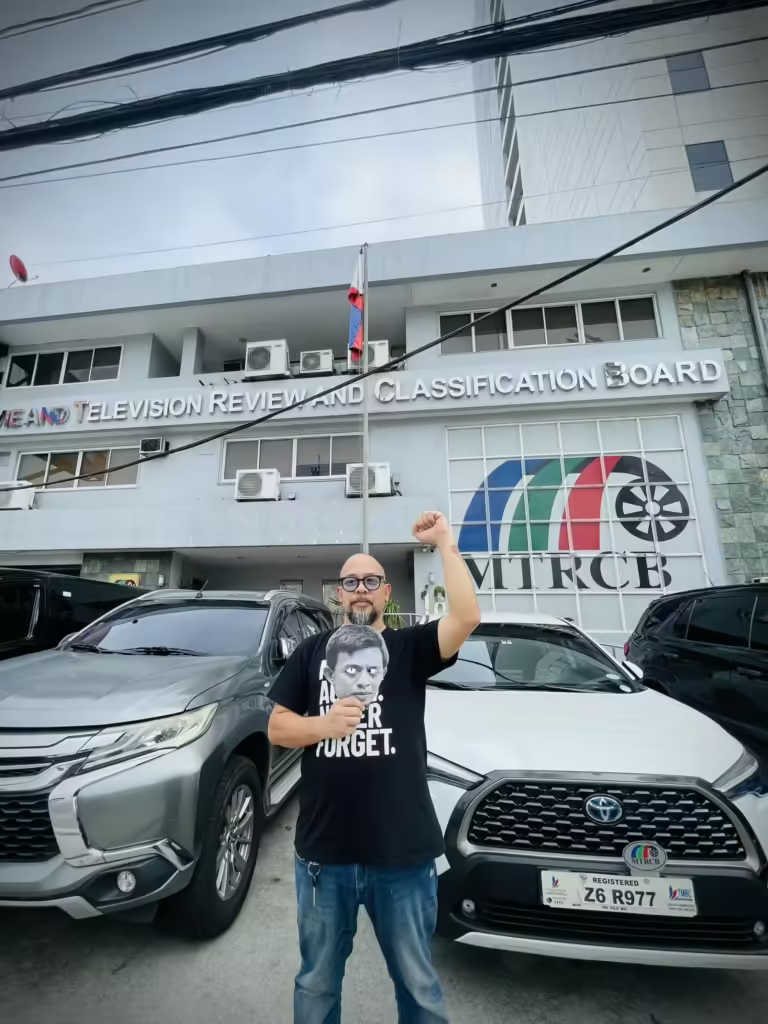
The National Union of Peoples’ Lawyers (NUPL) condemns the X-rating of the documentary film Alipato at Muog by the Movie and Television Review and Classification Board (MTRCB). Its chairperson, Diorella Maria “Lala” Sotto-Antonio, defended the banning at yesterday’s Senate Committee on Finance hearing as a valid exercise of its powers under Presidential Decree No. 1986, a martial law decree that significantly broadened the power of the state’s censorship apparatus.
PD 1986 grants the MTRCB authority to disapprove the exhibition of films and television programs that, based on contemporary Filipino cultural values, are deemed immoral, indecent, harmful to the Republic’s prestige, or with a dangerous tendency to incite violence, wrong or crime such as those that tend to undermine the people’s faith and confidence in the government.
Particularly concerning is the criterion that allows censorship if the expression injures the Republic’s prestige, effectively enabling the suppression of political speech, including dissent and criticism, as is evident in the case of Alipato at Muog.
The decree moreover invokes the “dangerous tendency” doctrine, a relaxed standard that permits the restriction of speech if it has a probable effect of producing a substantive evil, even if the danger is not imminent. This standard is incompatible with modern jurisprudence favoring the “clear and present danger” test, which requires the presence of a serious and imminent threat before speech can be restricted.
By relying on outdated and overly broad standards, the MTRCB’s decision to give the documentary an X-rating is not justifiable under current legal norms, especially the Bill of the Rights. It marks a return to repressive practices of the martial law era that not only directly threaten freedom of expression, but also suppress a militant press “essential for the political enlightenment and growth of the citizenry” (Burgos v. AFP Chief of Staff, G.R. No. L-64261, December 26, 1984).
As counsel of the Burgos family in their unsuccessful court battle against Maj. Harry Baliaga, one of Jonas’ captors, the NUPL notes how the insidiousness of the X-rating lies in its subtlety. It does not bear the visible scars of physical violence, but it wounds all the same. It may not disappear the filmmakers, but it seeks to erase their voices and bury their work in obscurity where it cannot challenge, provoke, and inspire. It is a quieter, yet equally dangerous form of impunity that shields the likes of Gen. Eduardo Año (powerful then as he is now) from accountability by cloaking their actions in the comforting silence of a censored public sphere.
This is more than a matter of a solitary act of censorship; it is a chilling reminder that the past, with all its repressive mechanisms, has not fully released its grip on the present. The X-rating of Alipato at Muog is not an isolated incident but a symptom of a larger, more grievous attempt to control the narrative and to sanitize the history that those in power find inconvenient.
The NUPL thus calls for the repeal of PD 1986, but until this is achieved, the immediate task is for the MTRCB to reverse its decision on Alipato at Muog. This is our legal demand and call for vigilance, to ensure that a tool of repression is dismantled and not merely set aside to be wielded at a more convenient time. Anything less is a betrayal of the freedoms that should never be bartered away in the name of the Republic’s “prestige.” #
References:
Atty. Ephraim B. Cortez
NUPL President
+639172092943
Atty. Josalee S. Deinla
NUPL Secretary General
+639174316396