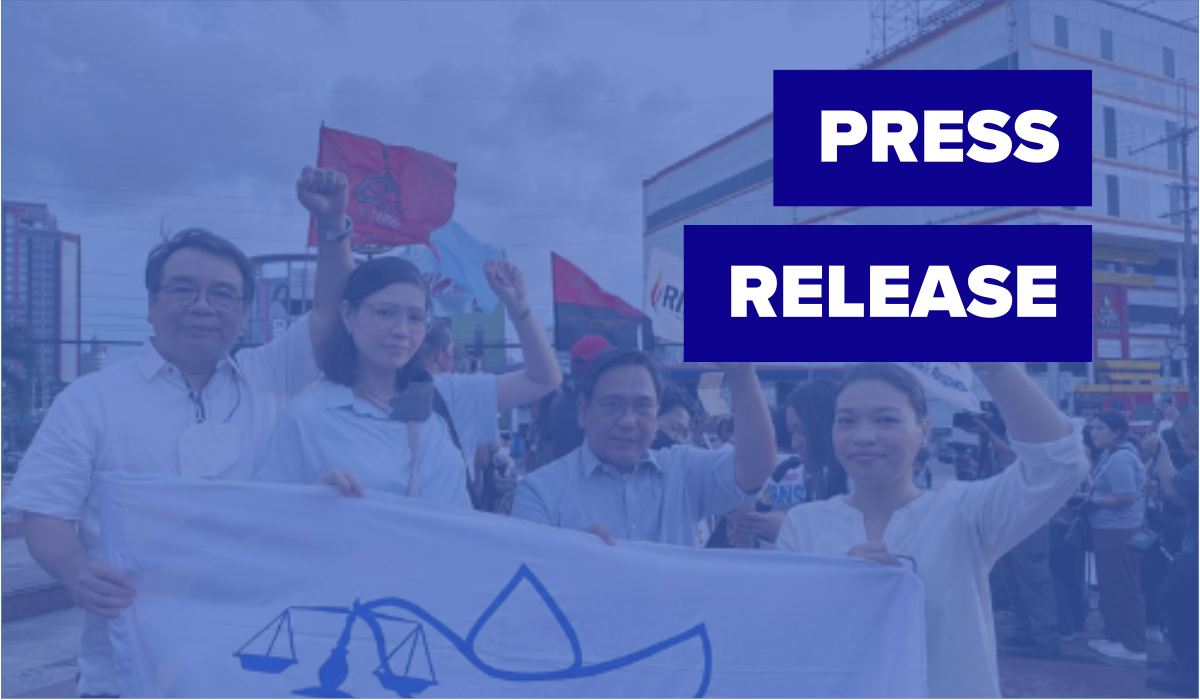
PRESS RELEASE
July 22, 2024
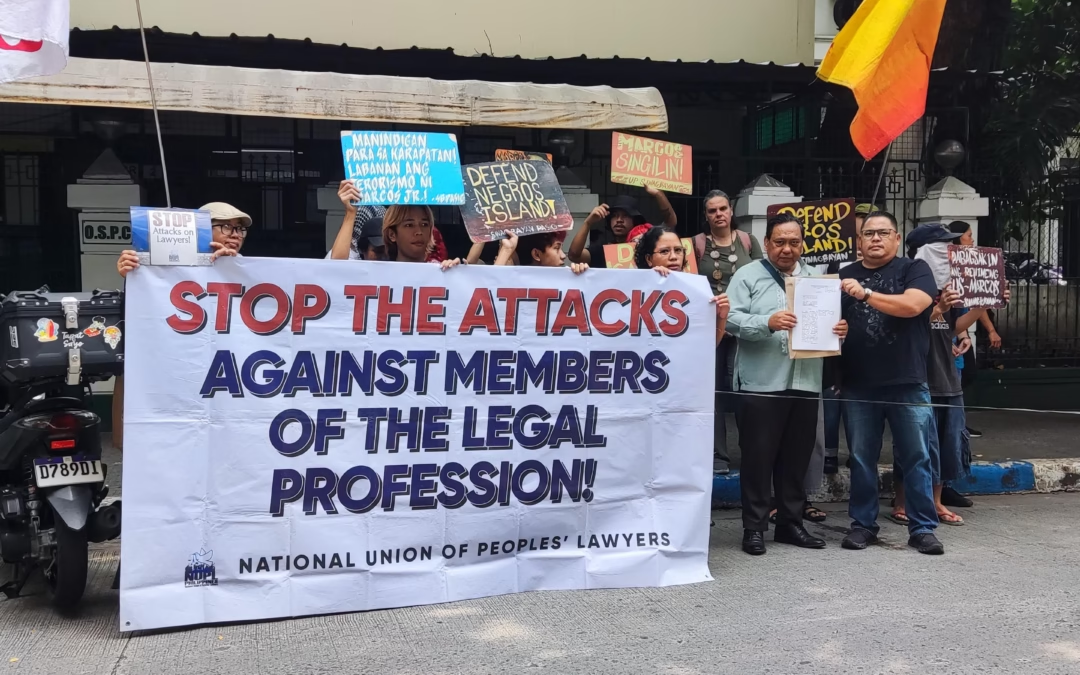
Manila, Philippines, July 22, 2024 – The National Union of Peoples’ Lawyers (NUPL) calls on President Ferdinand R. Marcos, Jr. to prioritize human rights and the issue of impunity in his upcoming third State of the Nation Address (SONA) before Congress.
“We hope that he mentions something about his government’s policy direction on respect and protection of human rights,” NUPL President Atty. Ephraim B. Cortez stated, noting that Marcos Jr.’s past SONAs have woefully ignored the critical state of human rights in the country.
Cortez highlighted the pressing need for decisive actions, particularly focusing on the notorious National Task Force to End Local Communist Armed Conflict (NTF-ELCAC). “We hope to hear him announce his government’s decision to abolish the National Task Force to End Local Communist Armed Conflict (NTF-ELCAC),” he added. The task force has been implicated in abducting activists, fabricating evidence for trumped-up charges, and red-tagging dissenters and state critics as “communist terrorists.”
This call for action echoes the recommendation of United Nations Special Rapporteur on freedom of opinion and expression Irene Khan, who urged President Marcos during her visit earlier this year to dismantle the task force to promote more inclusive peacebuilding efforts.
Cortez underscored the necessity of a concrete policy framework to curb human rights violations and address the prevailing climate of impunity in the country. “We expect a concrete policy that will tend to curb human rights violations in the Philippines and ease the climate of impunity, not some motherhood statements praising its own human rights initiative like the human rights super body,” he remarked.
Moreover, Cortez urged President Marcos to reassess the government’s counter-insurgency strategies and counter-terrorism measures that breach human rights and international humanitarian law standards. He cited the increasing incidence of arbitrary freeze orders against humanitarian NGOs and baseless charges of financing terrorism against development workers.
“These repressive measures, together with his government’s anti-poor economic policies and continuing impunity for grave human rights violations, will always provide the material conditions for dissent and armed conflict,” Cortez added. As these issues are deeply embedded in the Philippines’ legal framework, he emphasized that the immediate repeal of anti-terrorism laws, along with renewed peace negotiations with the Communist Party of the Philippines (CPP), the New People’s Army (NPA), and the National Democratic Front (NDF), is imperative to achieving lasting peace.#
References:
Atty. Ephraim B. Cortez
NUPL President
+639172092943
Atty. Josalee S. Deinla
NUPL Secretary General
+639174316396