The Philippine government has recently announced the signing of a Standard Operating Procedure (SOP) for handling terrorism and terrorism financing cases, claiming it aligns with international best practices through the technical expertise of the United Nations Office on Drugs and Crime (UNODC) and funding support from the Australian Government. This announcement coincides conspicuously with the on-site verification visit of the Financial Action Task Force (FATF), as the Philippines seeks to exit the FATF Grey List.
This timing raises significant questions about whether the SOP is a genuine effort to “uphold fundamental principles of human rights” or simply a gesture aimed at appeasing international scrutiny. One must ask: why now? Why is the Philippine government doing this only now—after filing hundreds of cases and freezing scores of bank accounts? These punitive measures involve civil society organizations (CSOs), development workers, and activists, many of whom have been caught in the broad net of the Philippines’ draconian terror laws.
The UNODC and other UN bodies must confront the implications of their involvement in legitimizing repressive counter-terrorism measures and take immediate steps to prevent their expertise from being co-opted to validate systemic human rights abuses. Similarly, the FATF, having sidelined civil society participation and operated opaquely, must reevaluate its very existence and move beyond metrics-driven assessments to prioritize the protection of civic space.
While procedural reforms under this SOP may impress international observers, they do not rectify the deeper structural flaws in the Philippines’ counter-terrorism framework. The scope of what constitutes funds related to financing terrorism, for instance, is disturbingly sweeping, given that the very definition of terrorism is overly broad. Freezing funds and bank accounts without due process, targeting organizations for their political beliefs or affiliations, and invoking terror laws against grassroots initiatives—these are not the hallmarks of a justice system adhering to international best practices.
The newly minted SOP, no matter how polished, cannot obscure the fundamental flaws in both the Philippine government’s counter-terrorism approach and the FATF’s enabling role. When terrorism is defined so broadly as to conflate terrorism with legitimate dissent, and when financial surveillance extends to humanitarian aid, the line between security and repression is blurred beyond recognition.
True “progress” demands more than performative compliance or empty gestures of reform. It requires dismantling the global counter-terrorism architecture that prioritizes securitization and state control at the expense of human rights. The FATF and other international mechanisms must own up to the profound harms their standards have enabled and commit to creating systems rooted in accountability and justice and centering the lived experiences of those most affected. Without such transformative change, these institutions will remain complicit in perpetuating a global regime of repression, cloaked as counter-terrorism, in the Philippines and beyond. #
Reference:
Atty. Josalee S. Deinla
NUPL Secretary General
+639174316396
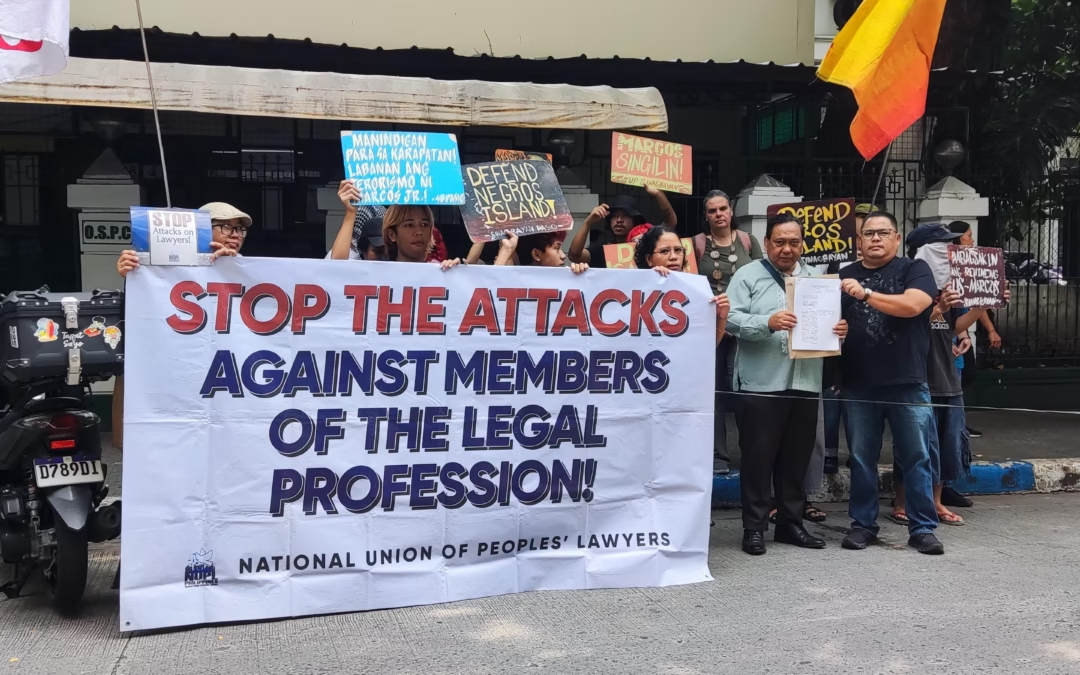
Photo by: Nuel M. Bacarra/Kodao