On the SC decision strengthening safeguards against unlawful searches
The National Union of Peoples’ Lawyers (NUPL) welcomes the Supreme Court’s firm reiteration in People v. Lucky Enriquez that search warrants must clearly and specifically identify the locations to be searched, as mandated by the Constitution. This decision is an affirmation of the fundamental rights of the people to be protected against unlawful searches and seizures.
January 7, 2025
The National Union of Peoples’ Lawyers is a nationwide voluntary association of human rights lawyers in the Philippines, committed to the defense, protection, and promotion of human rights, especially of the poor and the oppressed.

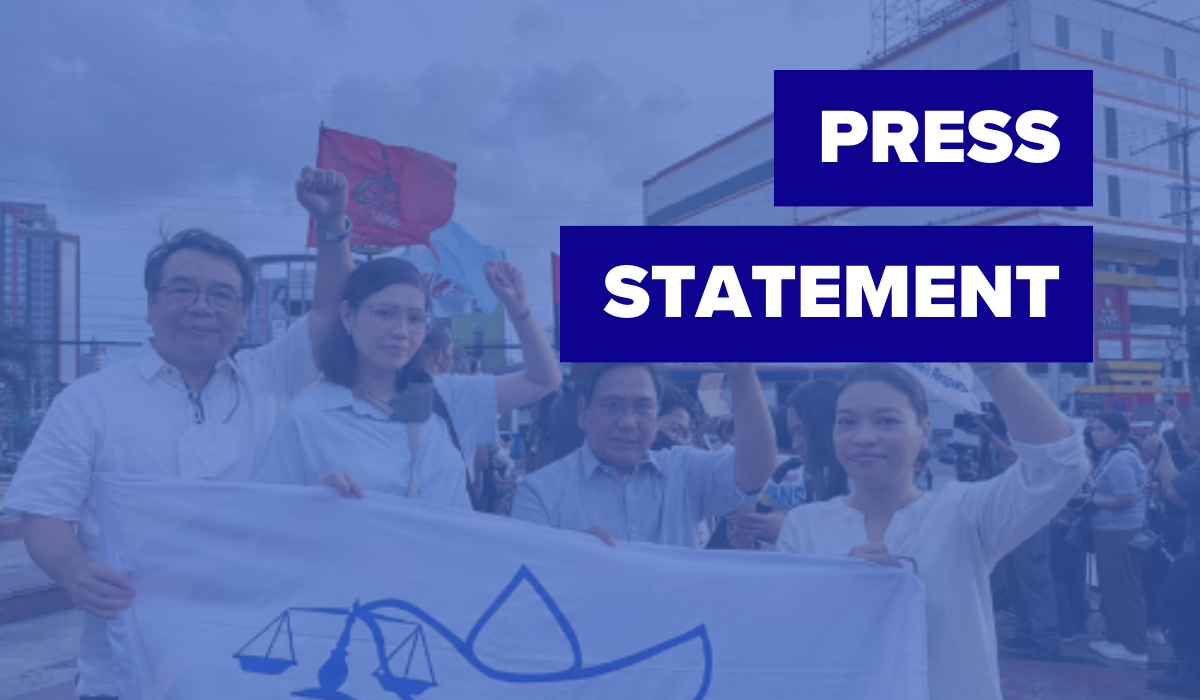
PRESS STATEMENT
January 6, 2025


On the SC decision strengthening safeguards against unlawful searches

The National Union of Peoples’ Lawyers (NUPL) welcomes the Supreme Court’s firm reiteration in People v. Lucky Enriquez that search warrants must clearly and specifically identify the locations to be searched, as mandated by the Constitution. This decision is an affirmation of the fundamental rights of the people to be protected against unlawful searches and seizures.

As an organization that has handled numerous cases involving trumped-up charges of illegal possession of firearms, ammunition, and explosives—cases initiated by the planting of evidence—we recognize the critical importance of strict adherence to constitutional standards in the issuance of search warrants. Precision and clarity in search warrants serve as essential safeguards against abuse, ensuring that the legal system is not weaponized to target dissenters, activists, and vulnerable communities.

This decision also brings to mind the vindication of activists Reina Mae Nasino, Ram Carlo Bautista, and Alma Moran, whose illegal possession cases were dismissed when the Court of Appeals reversed the trial court’s denial of their motions to quash the defective search warrants used against them. As the appellate court underscored, “The subject Search Warrants indicated the wrong address and with the wrong description, which resulted [in] the improper implementation.” The inconsistencies in the search warrants, including the wrong address and description of the location, led to the suppression of evidence illegally obtained from them. Their case illustrates the grave consequences of vague and erroneous search warrants and the urgent need to hold the judiciary and law enforcement to the highest standards of constitutional compliance.

We hope that this decision will be robustly implemented, setting a precedent for accountability and fostering a culture of respect for human rights within the justice system. The NUPL remains steadfast in its commitment to advocating for the rights of the marginalized and opposing all forms of legal and systemic oppression. #


Reference:
Atty. Josalee Deinla
NUPL Secretary General
+639174316396
Read more

In the Service of the Filipino People

In the Service of the Filipino People

NUPL Vice President Atty. Angelo Karlo Guillen and Secretary General Atty. Josa Deinla with lawyers from the Kennedy Human Rights Center and Kerry Kennedy at the Capitol in Washington D.C.

Philippine Defeat in UN Security Council Bid Shows Human Rights Record Cannot Be Ignored

Philippine Defeat in UN Security Council Bid Shows Human Rights Record Cannot Be Ignored

The Philippine government finds paths only to new methods of repression and enforces the peace of the grave at home. Human rights monitors, including Karapatan, document a continuing pattern of violence: extrajudicial killings, enforced disappearances, arbitrary arrests, and widespread attacks on rural communities. On April 19, state forces killed 19 people in Toboso, Negros Occidental, including civilians standing in solidarity with farmers asserting their land rights.

On the Denial of the Petition Challenging the Terrorist Designation of Cordillera Peoples Alliance Leaders and the Constitutionality of the Anti-Terrorism Act

On the Denial of the Petition Challenging the Terrorist Designation of Cordillera Peoples Alliance Leaders and the Constitutionality of the Anti-Terrorism Act

The petitioners, all respected advocates for indigenous peoples’ rights and self-determination, sought judicial review of their designation as terrorists by the Anti-Terrorism Council (ATC) in 2023. Their petition constituted the first—and, to our knowledge, remains the only—as-applied constitutional challenge to the ATC’s power to designate individuals and organizations as terrorists under the Anti-Terrorism Act of 2020.

Share This