Press Statement
June 3, 2026
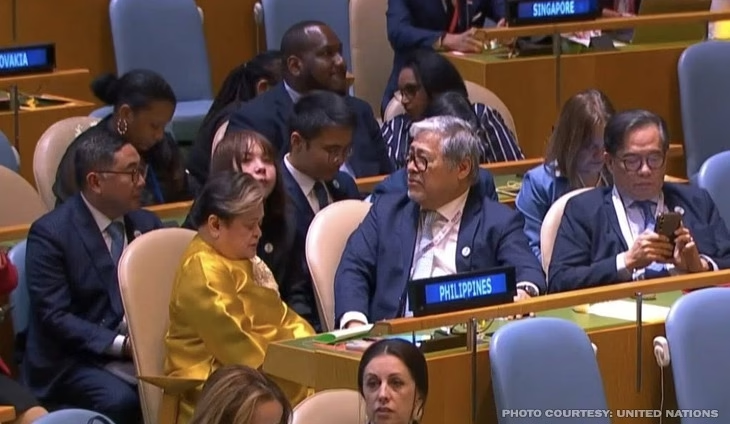
Press StatementThe Philippines’ failure to secure a non-permanent seat on the United Nations Security Council for 2027–2028 highlights the gap between its diplomatic campaign and conditions on the ground.
We hold no illusions about the UN Security Council itself—an institution whose veto structure has long enabled impunity for powerful states. Still, today’s outcome is significant: it denies the Marcos administration the international endorsement it sought and sets back its effort to burnish its global image as “pathfinder, partner, and peacemaker.”
The Philippine government finds paths only to new methods of repression and enforces the peace of the grave at home. Human rights monitors, including Karapatan, document a continuing pattern of violence: extrajudicial killings, enforced disappearances, arbitrary arrests, and widespread attacks on rural communities. On April 19, state forces killed 19 people in Toboso, Negros Occidental, including civilians standing in solidarity with farmers asserting their land rights.
The $2.5 billion in US security assistance signed into law in December 2025 has deepened the Philippines’ dependence on a foreign military patron and turned the country into a forward platform for US strategic interests, placing Filipino civilians at risk of being drawn into conflicts not of their choosing. US-supplied attack helicopters have been deployed against domestic targets, including in operations affecting peasant communities and indigenous peoples. There have been no publicly reported US Leahy Law designations involving Philippine military units despite extensive documentation of abuses.
Today is a moment of accountability—one the international community must not squander. We thus call on states, international bodies, and civil society to sustain scrutiny of the human rights situation in the Philippines, to hold the Marcos administration to the standards it invoked in seeking this seat, and to stand with the victims of state terror. ###
Reference:
Atty. Josalee S. Deinla
NUPL Secretary General
+639174316396
Photo credit: Abogado.com.ph