PRESS STATEMENT
December 29, 2025
The attack by retired general Antonio Parlade on Dean Tony La Viña is an intellectually bankrupt effort to draw a line around what may be said and who may say it.
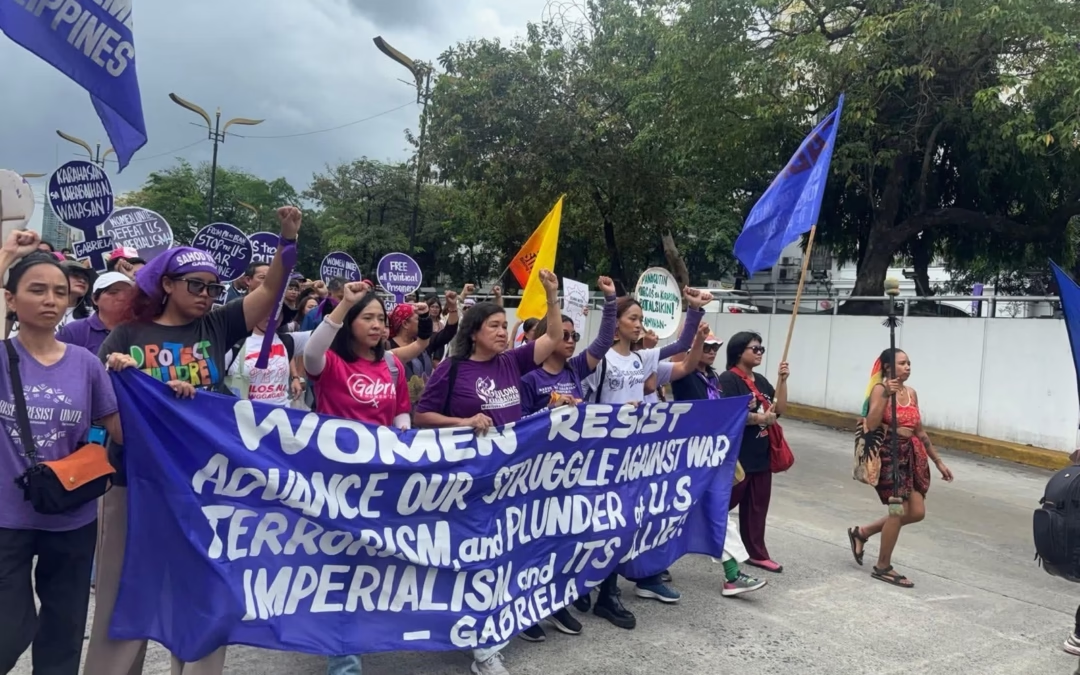
Parlade red-tagged Dean Tony after Rappler published Dean Tony’s opinion article criticizing the affirmation of the conviction of the “Talaingod 13”—participants in a 2018 humanitarian mission that protected Lumad schoolchildren from paramilitary forces in Talaingod, Davao del Norte. Instead of answering the critique, Parlade recast it as proof of Dean Tony’s supposed “love” for the CPP, without offering any evidence. He ignored the substance of the piece: the humanitarian mission that led to the case, and the legal and moral questions raised by the conviction of former Makabayan party-list representatives Ka Satur Ocampo, France Castro, and the volunteer teachers.
Dean Tony’s position is clear and factual. He situates the Talaingod 13 case within the realities of militarization in Lumad communities, the closure of indigenous schools, and the forced displacement of children and teachers. He argues that their evacuation was a humanitarian response shaped by conditions on the ground, including persistent military and paramilitary presence, documented threats and harassment, and the resulting insecurity that led to the closure of Lumad schools. His critique is anchored in constitutional guarantees, child-protection principles, and the Philippines’ international obligations to Indigenous Peoples.
Parlade addressed none of these legitimate grounds for public discussion and disagreement, relying instead on guilt by association. His attack rests on the dangerous assumption that to criticize State action is to side with the CPP-NPA. But under any democratic order worth the name, no citizen is required to prove loyalty before questioning official actions.
Red-tagging penalizes speech and advocacy rather than engaging them on their merits. It turns disagreement into suspicion and marks individuals as enemies, with consequences that Philippine experience has made tragically familiar.
On this, the Supreme Court has been unambiguous. In Deduro v. Vinoya, the Court recognized red-tagging, vilification, labeling, and guilt by association as threats to life, liberty, and security under the Rule on the Writ of Amparo, and held that courts need not wait for injury before extending protection. The Court described red-tagging as a likely precursor to abduction or extrajudicial killing, noting the pattern of surveillance, harassment, and threats suffered by those so labeled.
In Gen. Bautista v. Atty. Dannug-Salucon, the Court affirmed that human rights lawyers who are surveilled, harassed, or labeled as communists or NPA members may seek protection through the writs of amparo and habeas data, and that public officials are bound by extraordinary diligence in preventing and investigating such threats. The Court also recognized that red-tagging is often carried out through covert and deniable means, and relaxed evidentiary rules accordingly.
Red-tagging is incompatible with constitutional guarantees of life, liberty, security, due process, and the freedoms of expression and association. To persist in this practice despite clear jurisprudence is to show contempt for rights and for the rule of law itself.
This is why red-tagging remains both unimaginative and corrosive. It teaches citizens that criticism and dissent can come at a steep price. It shrinks public space and replaces debate with fear. It sends the chilling message that to defend rights or challenge injustice is to invite danger.
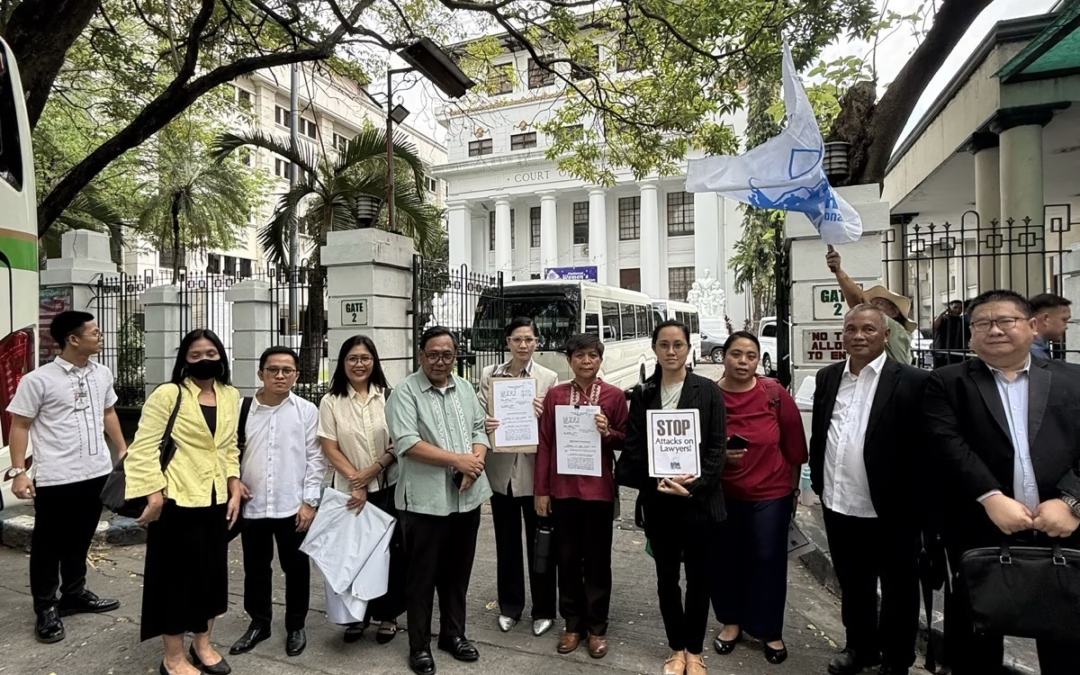
The NUPL stands with Dean Tony La Viña, a human rights lawyer and environmental rights defender who has consistently shown solidarity with people’s lawyers under attack. Our members and other advocates have long been subjected to vilification, threats, surveillance, and red-tagging offline and online by the same figures and forces, including Parlade and various state agents and proxies.
People’s lawyers will continue to stand together against every form of attack, including red-tagging. Experience should have taught Parlade and others who traffic in this practice that intimidation does not deter us from our work. It only sharpens our resolve to confront the weaponization of law, as seen in the prosecution of the Talaingod 13, and to defend those whose rights are trampled in the name of security.
Reference:
Atty. Josalee S. Deinla
Secretary General
National Union of Peoples’ Lawyers
+63 917 431 6396
*Photo by Bulatlat