PRESS STATEMENT
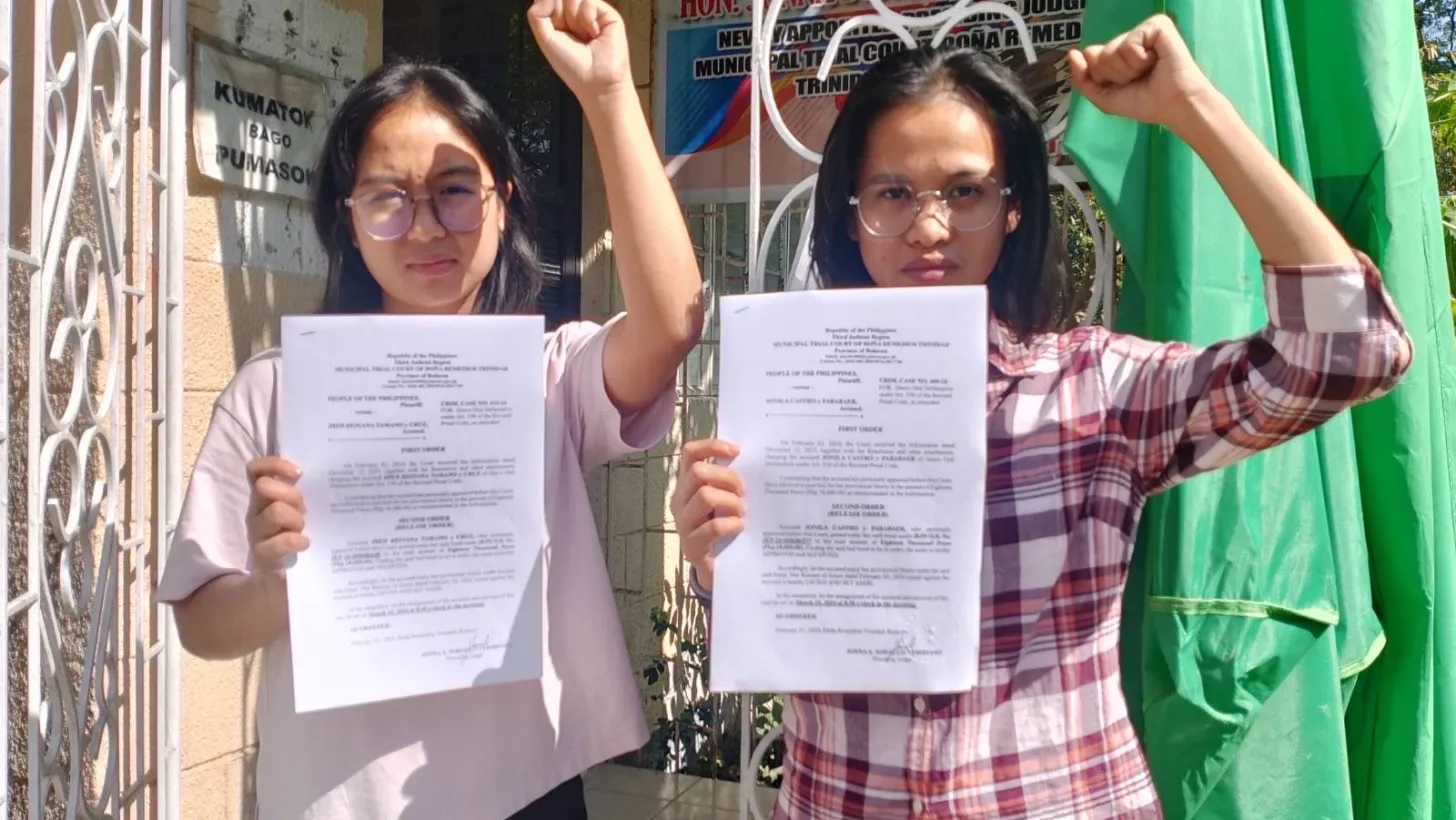
In a Decision dated August 2, 2024, the Court of Appeals’ Former Special Eighth Division of Five denied the privilege of the writs of amparo and habeas data to environmental rights activists Jhed Reiyana Tamano and Jonila Castro. The Court of Appeals found their testimonies regarding their abduction and detention from September 2-11, 2023 as “credible, straightforward, and worthy of belief,” but it nonetheless held that they failed to prove with substantial evidence the existence of an imminent or continuing threat and State participation in the alleged threats. The Court of Appeals also ruled that the petitioners were under no threat while inside the military camp on September 12-19, 2023 as they were able to freely roam around the premises, converse and socialize with military personnel, and even watch shows on Netflix.
We respectfully disagree.
Between the petitioners and the respondents, the former are more credible. Their accounts—including the acknowledgment that they faked their “cordial” attitude inside the military camp “out of survival”—are the ones in harmony with human experience and logic. Unfortunately, they were given less weight and credence, as opposed to the supposed “courtesy” and “respect” displayed by the soldiers towards the petitioners while they were at the military camp.
The Court of Appeals’ characterization of Jhed and Jonila’s fear inside the military camp as merely “rooted in preconceived distrust and suspicion of the military,” rather than a response to an actual deprivation of liberty, is disturbingly out of touch with reality. The notion that they were free to leave at any time defies common understanding of what it means to be under duress. Freedom from such fear, as held time and again in jurisprudence, is the essence of the right to security.
The Court of Appeals’ skepticism over Jhed and Jonila’s accounts of security threats that they continued to experience after their release represents a lost opportunity to apply the prevailing standard of totality of evidence. This standard, adopted by the Supreme Court, was designed to respond to evidentiary challenges confronting petitioners in amparo and habeas data proceedings. Among others, the Court of Appeals could have appreciated glaring evidence of the respondents’ involvement in the press conference where they sought to construct the false narrative of Jhed and Jonila’s surrender.
By ruling that there are no longer any threats against Jhed and Jonila, the Court of Appeals also failed to uphold the Supreme Court’s recent ruling in Deduro v. Vinoya, which pronounced that red-tagging is a threat to life, liberty, and security and recognized its nature as a prelude to grave human rights violations such as extrajudicial killings and enforced disappearances. The plain reality is that Jhed and Jonila, as they continue to be red-tagged by government officials and State agents, remain unsafe.
On the other hand, the respondents not only failed to demonstrate the “extraordinary diligence” required by the rules in the performance of their duties, but they also presented evidence that only raised more questions. The respondents failed to explain the grievous lapses in their token “investigation” of the petitioners’ abduction as, in fact, they even admitted to not knowing the “informants” who turned over the petitioners to them. As correctly observed by Justice Emily San Gaspar-Gito in her dissenting opinion, this “information blackout prior to the alleged September 21 surrender is enough to raise doubt as to the veracity of respondents’ claims.”
The Decision is a stark departure from jurisprudence concerning the fundamental rights to life, liberty, and security. As held in Deduro, the right to security exists independently of the right to liberty and it not only prohibits the State from arbitrarily depriving liberty, but also imposes a positive duty on the State to afford protection for the right.
When these rights are violated, the breach is not contained; it provides fertile ground for further transgressions against the rights to due process, to remain silent, to counsel, and against self-incrimination. Each erosion of these protections inches us toward a dangerous threshold, where the unchecked expansion of State power casts a long shadow over our liberties.
We stand firmly with Jhed and Jonila in their pursuit of justice and accountability. Their courage to confront the State and its sprawling machinery is nothing short of extraordinary, especially at a time when silence is too often the path of least resistance.#
References:
Atty. Ephraim B. Cortez
NUPL President
+639172092943
Atty. Josalee S. Deinla
NUPL Secretary General
+639174316396