Joint Statement of the NUPL and the PILC on the Exercise of the Freedoms of Speech, Expression, Peaceful Assembly, and Association in Educational Institutions
27 August 2026
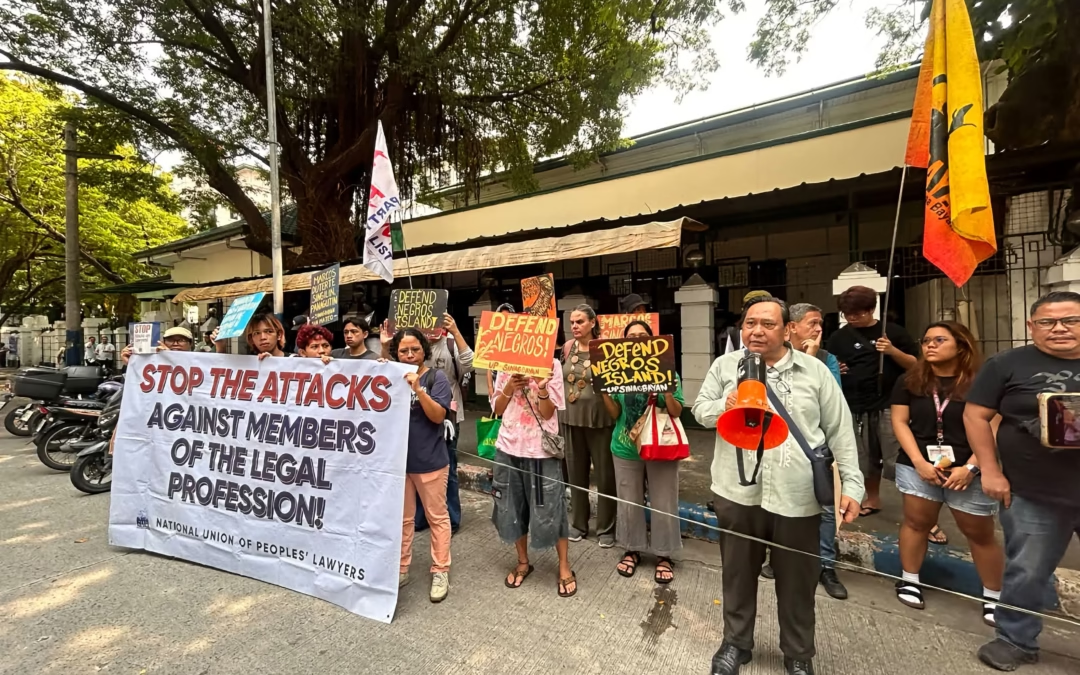
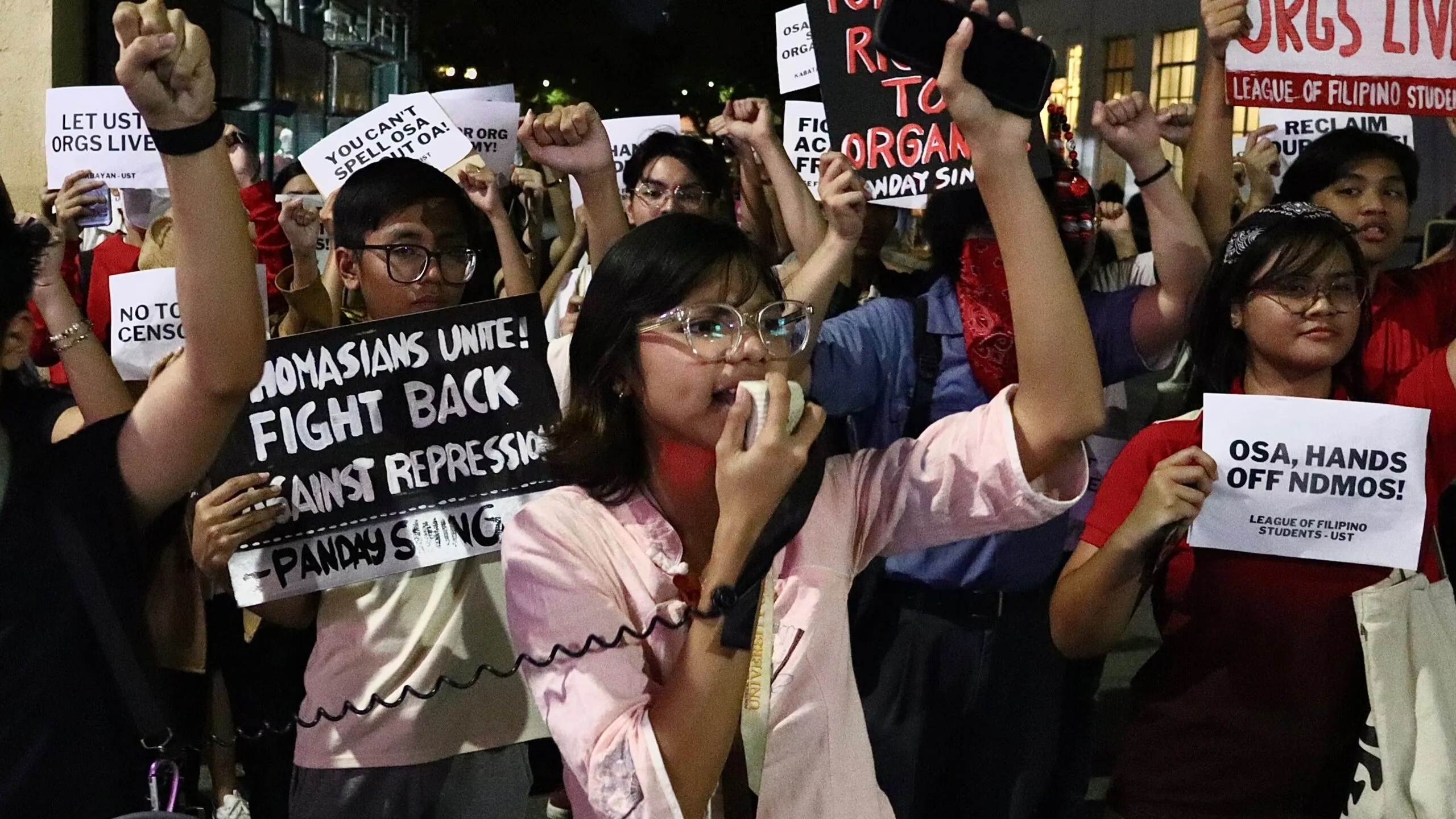
The National Union of Peoples’ Lawyers (NUPL) and the Public Interest Law Center (PILC) express grave concern over the continuing use of school regulations and disciplinary proceedings against students for acts that, at their core, constitute the exercise of the freedoms of speech, expression, peaceful assembly, and association.
Students do not leave their rights at the school gate. Educational institutions, whether public or private, are places where ideas must be tested, questioned, debated, and challenged. They should cultivate critical thought, not demand unquestioning conformity.
The Supreme Court has long recognized this principle. In Malabanan vs. Ramento, the Court declared that students, like other citizens, enjoy “the freedom to express their views and communicate their thoughts to those disposed to listen in gatherings“ and do not “shed their constitutional rights to freedom of speech or expression at the schoolhouse gate.” While schools possess legitimate disciplinary authority, such authority cannot extend so far as to violate constitutional safeguards.
The same principle was reaffirmed in Non v. Dames II, a case involving students who were disciplined for joining protests. The Court recognized their constitutional and statutory rights to education, free speech, and peaceful assembly, ruling that schools cannot simply invoke their disciplinary authority to punish the legitimate exercise of these freedoms.
These principles matter urgently amid a series of administrative complaints now confronting student activists.
In one case, a faculty member at a private university in Manila filed a lengthy administrative complaint against student leaders Raven Kristine Racelis, Ralph Christian Manuel, and Kerby Calizar, reportedly arising from their activism and from statements and actions questioning the presence and activities of state security forces at the university. It followed students’ criticisms of, among others, a colloquium on “terror grooming” and activities involving military personnel on campus.
Racelis was also made respondent in a separate administrative complaint filed by a fellow student, reportedly alleging bullying after she called him out for red-tagging.
In a third complaint, Racelis and fellow student activists Manuel, Mecaella Sean Carl Capalar, and Dex Anderson Frogoso were named respondents in another administrative complaint after an encounter with Philippine Air Force personnel at a university exhibit. Students raised questions about military operations and human rights violations, voicing their protest as they left the area.
The pattern extends beyond one university. At a private college in Quezon City, the school administration imposed disciplinary action against a student activist for raising concerns regarding the school policies and joining the college chapter of a youth mass organization.
At a college in San Jose del Monte, Bulacan, a student faced the severe penalty of revocation of enrollment for joining a Pride rally held immediately outside the campus. Although the revocation related only to the previous academic year, the college has still not allowed his enrollment for the current academic year to proceed.
These cases implicate freedoms essential to both constitutional democracy and meaningful education. Freedom of speech and expression protects the right of students to question, criticize, dissent, and take positions on matters affecting their schools, their communities, and society at large. Freedom of peaceful assembly protects their right to act collectively and make their voices heard, including through demonstrations and protests. Freedom of association protects their right to organize, to join organizations of their choosing, and to act together in pursuit of common civic, political, economic, social, and cultural causes. These constitutional guarantees are meaningless if they only shield comfortable, convenient, and agreeable views and opinions. They must also protect those that challenge prevailing policies, institutional practices, and power structures.
These freedoms are no less worthy of protection within an educational institution. Schools and universities occupy a special place in a democratic society precisely because they are meant to foster inquiry, critical thinking, and open debate. Students must be free to ask difficult questions, challenge orthodoxies, organize around causes, and address public issues without fearing that exercising these freedoms will expose them to disciplinary proceedings.
Educational institutions must resist the temptation to recast disagreement as discourtesy, criticism as disobedience, association as misconduct, and protest as disruption through arbitrary disciplinary labels.
Any university worthy of its name cannot preach critical thinking while punishing students for practicing it. It cannot profess a commitment for human rights while penalizing their exercise, nor can it hide behind academic freedom to suppress the democratic rights of its students.
Fundamental freedoms are especially vital within educational institutions because education is not simply the transmission of knowledge; it is the formation of citizens capable of questioning authority, confronting injustice, and shaping democratic society.
NUPL and PILC stand with students defending their rights. We call on all educational institutions to immediately cease disciplinary mechanisms against student criticism, political engagement, peaceful protest, and lawful association. ###
Reference:
Atty. Josalee S. Deinla, NUPL
+639174316396
Atty. Mark Vincent D. Lim, PILC
+639691965675
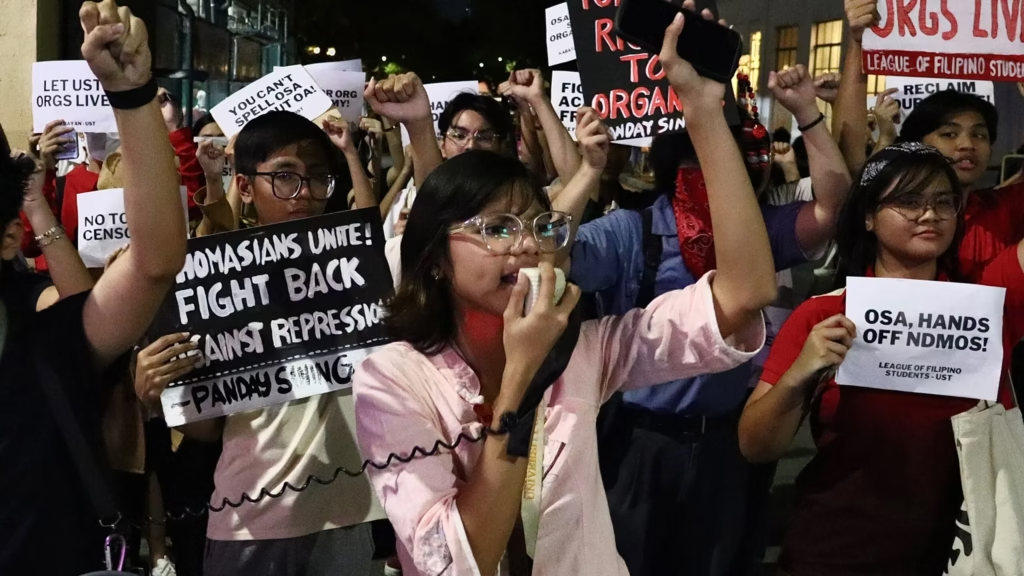
Photo credit: Altermidya