Contrary to circulating rumors, the International Criminal Court (ICC) will not immediately close nor Rodrigo Roa Duterte be automatically released upon pressure by the United States of America and their President Donald Trump. The court is not supported by money from the US, and none of its physical facilities are hosted by or in the US.
The ICC is a consent- and rules-based tribunal that forwards one of the foundations of the international legal order: there must be accountability for grave crimes. It cannot bow down to the wishes of the few, and more so, to the whims of the small-minded.
The Duterte case and the Philippine situation was brought to the court’s attention by many entities, including the very victims of the “war on drugs”. The investigation and case were vetted vigorously under the court’s systems and protocols. We see no direct risk of the sanctions to the proceedings, as the Duterte case moves on to trial stage by end of November 2026. Even if the decision on Duterte’s fitness to stand trial is still pending, the trial chamber has confirmed that Duterte must be kept in detention.
There is indirect danger if the measures paralyze operations in institutional or personal transactions. Some of Trump’s sanctions are already in place – individual personal assets within US jurisdictions have been frozen, access to US-linked financial and software services restricted, and individuals barred from entering the United States. Eleven officials, including nine judges, already have serious issues with finances and communications. This is an affront to judicial independence and the rule of law and justice.
Also, withdrawal from the court by any or all of the 125 member countries, as Trump commands, will only take effect after a year of formal notice. This is a guarantee of legal accountability. Duterte’s case will be sooner resolved than the court dissolved. We urge the state-parties and even non-state parties of the ICC to use “blocking statutes” to obstruct the extra-territorial effects of unreasonable foreign legislation.
Dismantling the ICC only benefits the tyrants, mass murderers, and war criminals. Victims of the “war on drugs” challenge the Marcos administration to stand with humanity, stand against impunity and injustice.
References:
Neri Colmenares
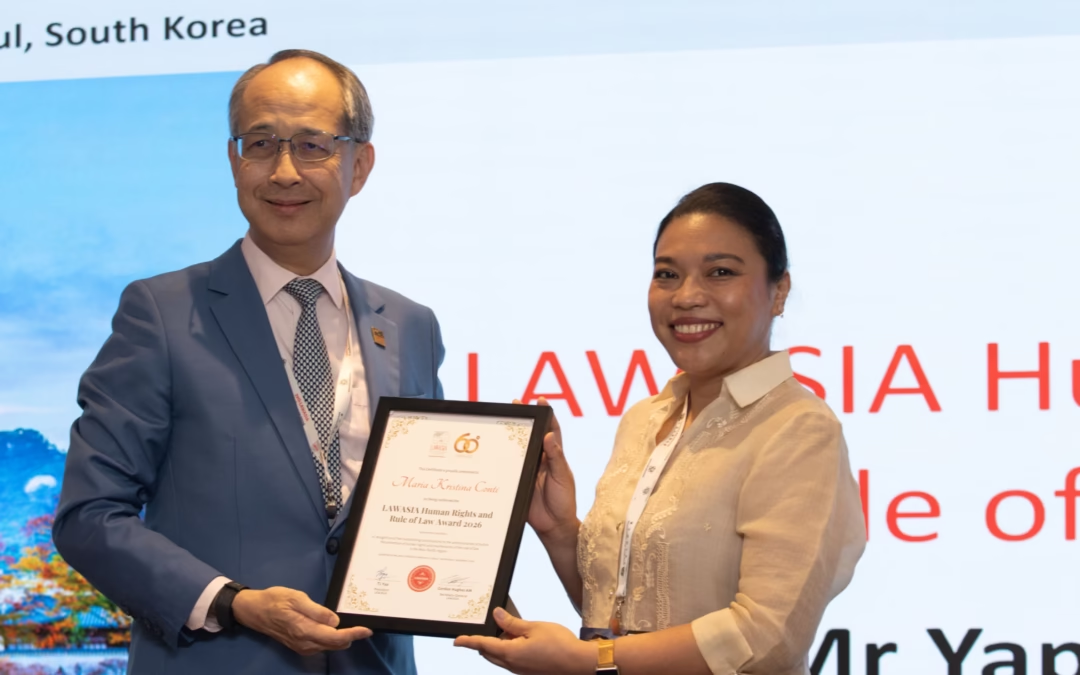
Kristina Conti