We, the National Union of People’s Lawyers (NUPL), are compelled to respond to President Ferdinand “Bongbong” Marcos Jr.’s recent statement at the Integrated Bar of the Philippines (IBP) National Convention, where he invoked the importance of ensuring that justice reaches the underserved, unseen, and unheard. While his words may resonate as noble, they are hollow without meaningful action.
Justice cannot merely be a concept spoken from podiums; it must be evident in governance, in laws, and in the treatment of those who seek to defend the people. His administration has failed to deliver on this promise, instead presiding over an environment where dissent is criminalized, human rights defenders are persecuted, and legal remedies are denied to the poor.
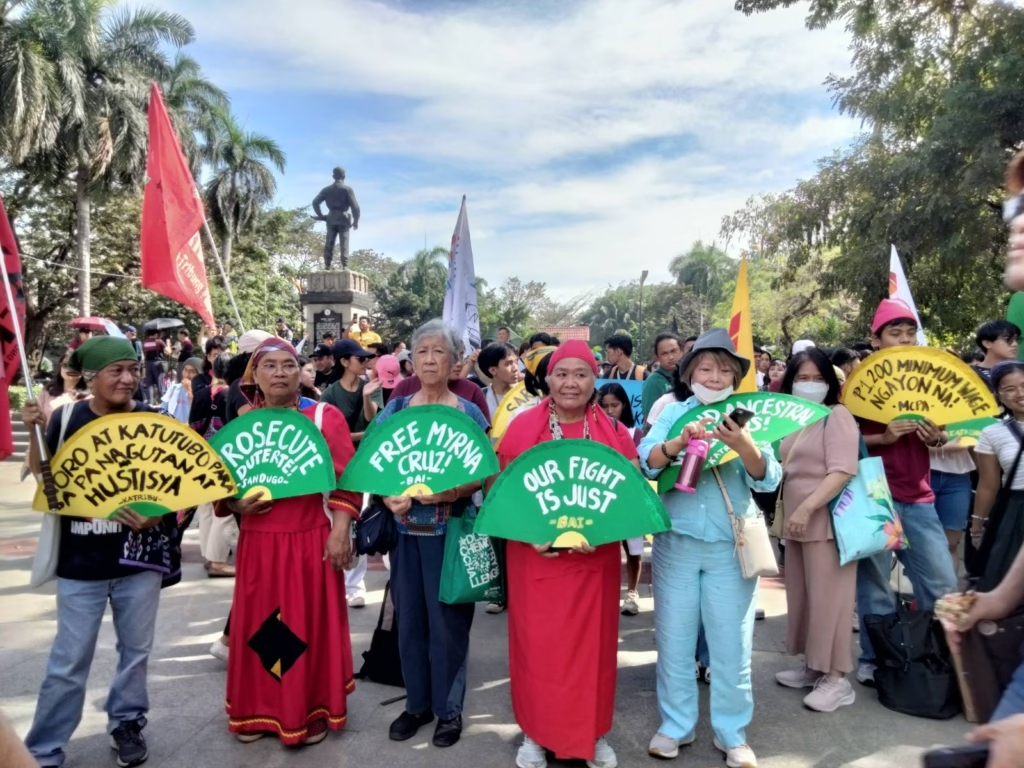
When the President says, “The law must serve all Filipinos—not just a privileged few,” we are reminded of the dissonance between this vision and the reality on the ground. The underprivileged face injustice daily, yet when they organize, protest, or defend their rights, they are met with fabricated charges, arbitrary arrests, and asset freezes disguised as counter-terrorism measures. Meanwhile, political allies accused of corruption and abuse continue to enjoy impunity. Justice for the privileged few appears swift and accommodating, but for the ordinary worker, farmer, urban poor resident, or activist, it is slow, selective, and punitive.
The President claims that his administration is committed to fairness and impartiality, but fairness cannot exist in a country where Mary Jane Veloso, a poor mother and a trafficking victim, continues to languish in jail. It is telling that the administration, which boasts of its commitment to the marginalized, cannot act decisively to free Mary Jane, all while protecting those in power who face no real consequences for their actions.
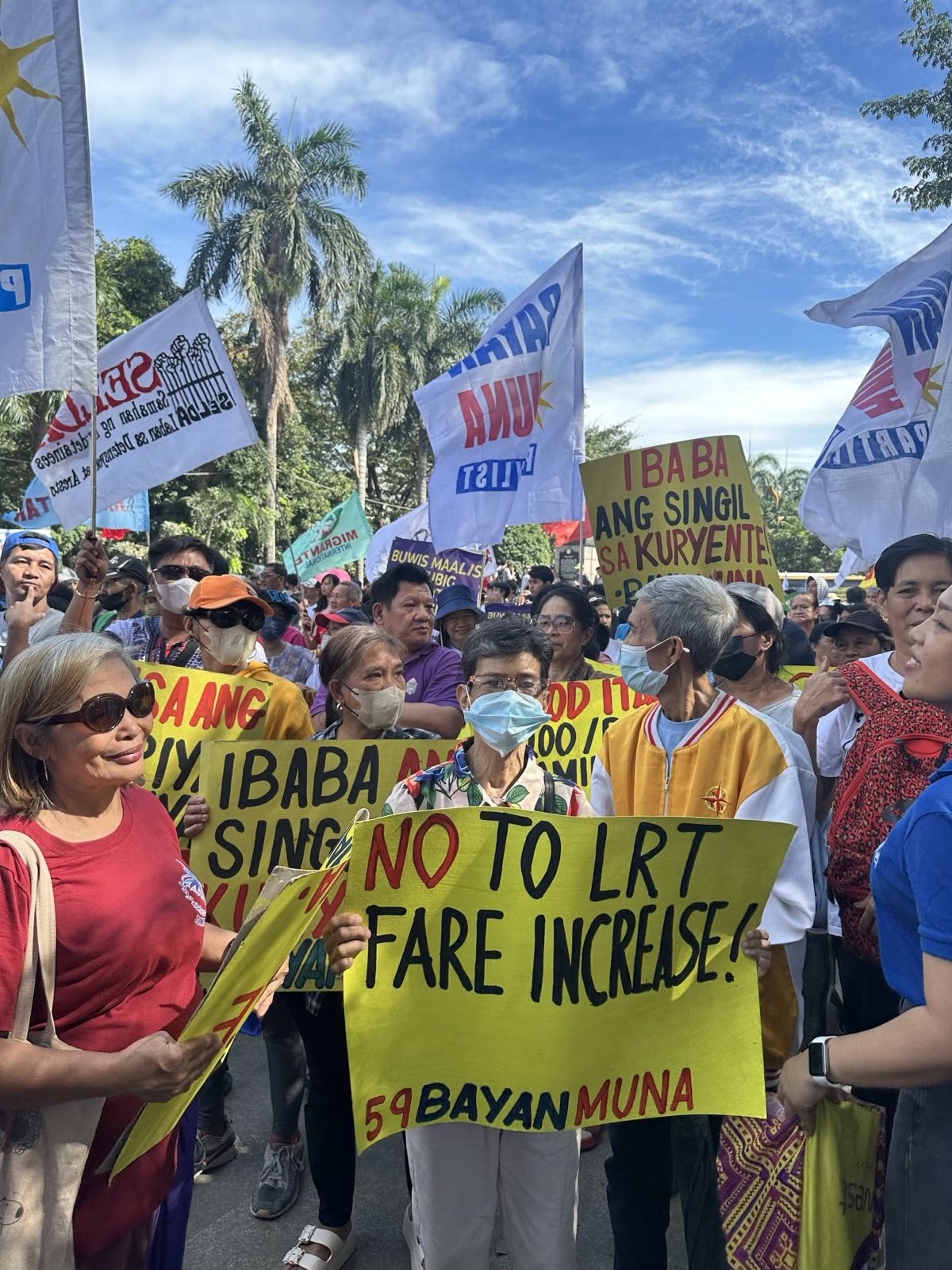
Justice also extends beyond courtrooms. Where is the President’s urgency to address the rising cost of basic goods, soaring inflation, stagnant wages, and the daily suffering of workers and commuters trapped in a broken public transportation system? These socio-economic hardships are not just issues of policy failure—they are issues of justice.
The poor are further burdened by environmental destruction caused by decades of neoliberal policies that have prioritized corporate profit and foreign investment over genuine and sustainable development. Land grabbing, deforestation, destructive mining, and reclamation projects have not only displaced marginalized communities but also stripped them of their means of survival, violating their most basic rights.
Even the constitutional commitment to accountability is being undermined as the government does nothing to hold Vice President Sara Duterte accountable, despite glaring questions about corruption and her controversial use of confidential funds. Justice, fairness, and the rule of law cannot flourish when those in the highest offices are shielded from scrutiny, while those fighting for the rights of the oppressed are treated as criminals.
Speeches filled with rhetoric about the Constitution and the rule of law are not enough. If this administration is sincere about justice reaching the margins, it must demonstrate that sincerity by ceasing the systematic harassment of human rights defenders, ending the red-tagging of lawyers and activists, and addressing the socio-economic issues that continue to oppress the underprivileged. Without these actions, the President’s words will remain little more than political theater, far removed from the reality of the people he claims to serve. #
Reference:
Atty. Josalee S. Deinla
+639174316396