PRESS STATEMENT
May 10, 2025
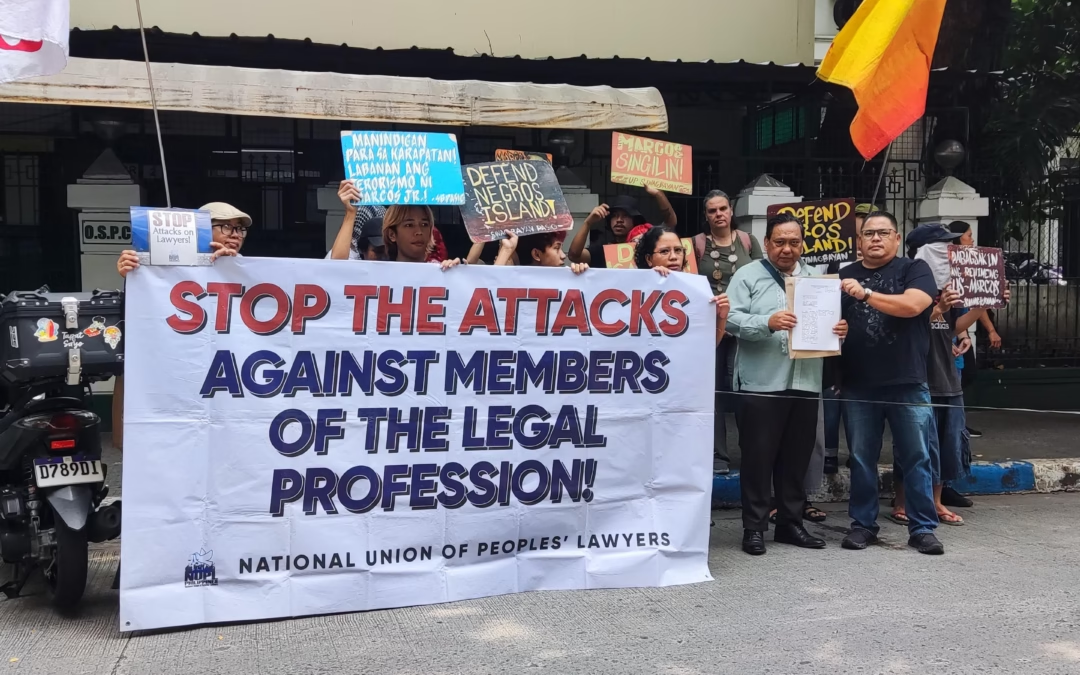
Memorandum Circular No. 83, which adopts the National Action Plan for Unity, Peace and Development (NAP-UPD) 2025–2028, cements the National Task Force to End Local Communist Armed Conflict (NTF-ELCAC) as the lead implementing agency of this so-called “blueprint” for peace. Beneath the rhetoric of peace-building, it revives and reinforces a state apparatus long implicated in red-tagging, arbitrary arrests, enforced disappearances, and other forms of politically motivated persecution.
What is framed as a “whole-of-nation” approach is, in reality, a recycled counterinsurgency strategy—tried, failed, and repackaged. It sidesteps the root causes of armed conflict and instead relies on trumped-up charges, perjured testimony from state-recruited witnesses, staged reintegration of alleged “former rebels” in militarized communities, and the coordinated red-tagging of rights defenders and dissenters.
The NTF-ELCAC lies at the core of this machinery of repression. Thus, UN Special Rapporteurs Ian Fry and Irene Khan, citing its central role in red-tagging and attacks on civil society, have both called for its abolition. Even the Office of the Ombudsman found its former spokespersons guilty of conduct prejudicial to public service, acting on a complaint filed by the NUPL.
Secretary Eduardo Año’s latest statement calls for “turning off the Red taps”—a euphemism for targeting civil society with financial repression. This framing attempts to cast legal organizations as enemies of peace, when in fact it is the shrinking of civic space and the systematic attack on dissent that undermines genuine democratic dialogue. Año’s proposal to vet foreign funding, establish government-run accreditation systems, and surveil NGO operations is not a peace mechanism; it is a scheme for authoritarian control dressed in development speak.
Worse, the call to legislate “due diligence” mechanisms for NGOs is a thinly veiled threat. It seeks to create a legal basis for defunding groups that challenge the state’s narrative and hold it accountable for violations of people’s rights. This would further criminalize solidarity, penalize development work, and vilify principled resistance as “terrorism.”
The NAP-UPD offers no credible path to peace. It forecloses prospects for negotiation and evades the structural conditions that fuel armed conflict: landlessness, joblessness, repression, and systemic exclusion. The claim that a “whole-of-nation approach” can secure peace is as hollow as the promises of every counterinsurgency campaign that came before—from Vietnam-era civic action to martial law psywar operations. Each failed because they treated rebellion as a problem of perception, not of injustice.
Until political power is democratized, land and wealth redistributed, national sovereignty asserted, and social justice realized, no policy—however artfully worded—will deliver peace. A whole-of-nation approach cannot dismantle a system that breeds resistance while preserving the very conditions that make such resistance necessary. ###
#NoJusticeNoPeace