Press Statement
October 18, 2025
Seven Congresses Strong: Advancing People’s Lawyering for Rights, Justice, and Accountability
Corruption in the Philippines is not an anomaly. It is embedded in the very structure of political and legal institutions. The misuse of public funds, the impunity of political elites, and the violent suppression of protest are not signs of dysfunction. They are signs of a system working exactly as it was designed to: to preserve power and protect privilege.
The Marcoses’ return to national leadership, after decades of documented plunder and abuse, is no historical accident. It is the result of a political order that has never reckoned with its past, and a legal system that has been repeatedly used not to exact accountability, but to evade it.
Today, that apparatus remains intact, even more insulated by confidential funds, penal statutes, and even judicial decisions that redefine the boundaries of political scrutiny. The Anti-Terrorism Act, for instance, has created a permanent state of emergency — a legal regime that allows the State to wield unbridled powers in the name of combating “terrorism.” In practice, however, many of those targeted are not terrorists but dissidents, activists, and human rights defenders. The broad definitions and sweeping powers in the law have normalized exceptional measures that operate outside ordinary constitutional safeguards.
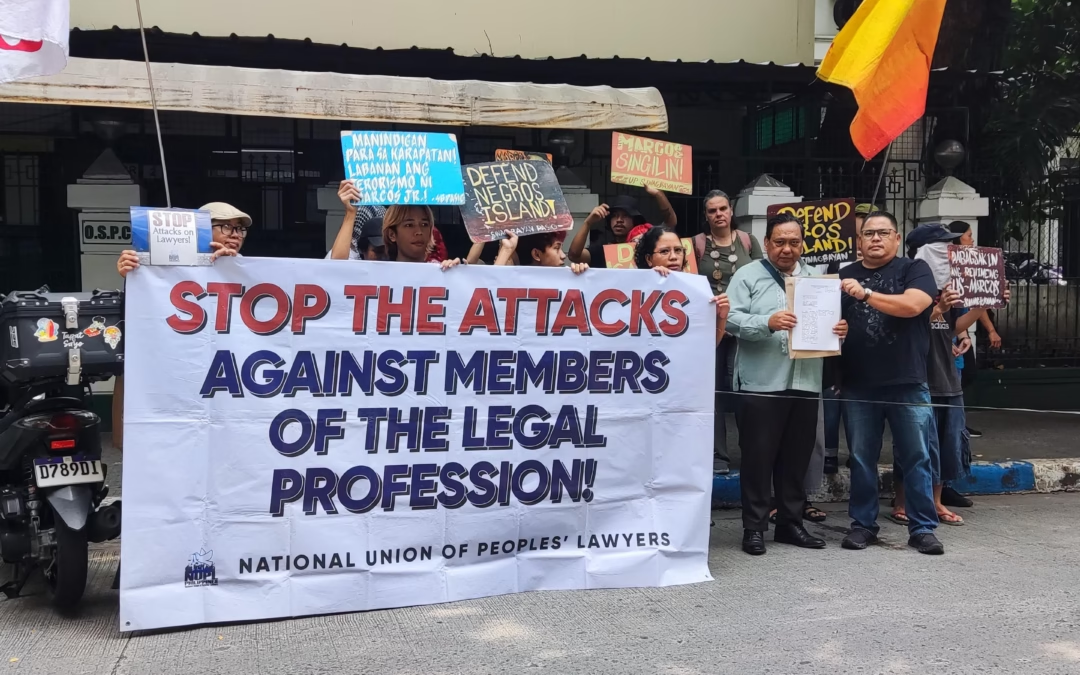
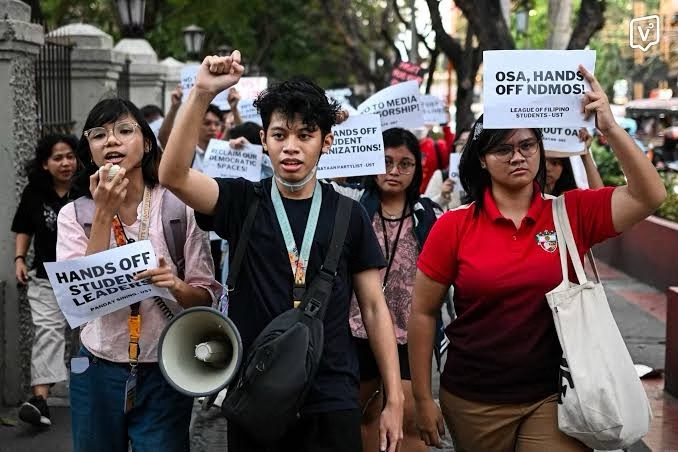
The mass arrests last September 21 reflect this logic. Hundreds were taken, including bystanders and children, many of whom are poor and had committed no crime. They were beaten, held without cause, and charged with sweeping offenses. That this happened on the anniversary of Martial Law only makes clearer that the means of repression have changed far less than we often assume.
Meanwhile, billions are quietly drained into anomalous projects as well as confidential and intelligence funds. The fact that Vice President Sara Duterte could exhaust ₱125 million in public funds in 11 days, without audit or consequence, is an indication of the immense discretionary power that governs state spending. The Supreme Court’s recent ruling in House of Representatives v. Duterte, which effectively barred Duterte’s impeachment trial, has redrawn the lines of political accountability even further away from public reach.
When laws are bent to silence criticism and shield the powerful, law itself becomes the infrastructure of impunity and repression.
This is where people’s lawyering must stand its ground.
Conventional law practice speaks of neutrality, as if lawyers were technicians untouched by politics. But in a society where inequality is systemic and repression is legal, detachment becomes complicity. The law is never neutral. It is shaped and enforced by those who hold power; and too often, it reflects their interests.
People’s lawyering confronts this reality head-on. It recognizes that upholding the rule of law requires challenging the laws that entrench injustice. It means advocating not just in courtrooms, but in communities — with workers, farmers, indigenous peoples, women, and others who face the brunt of state violence and economic exclusion.
The aim is not to rehabilitate a broken system, but to interrogate what decays it — and where possible, to use the law to assert rights and build power from below. The law will not change on its own. It must be constantly contested and reshaped, politically and legally, until it serves the public it claims to protect.
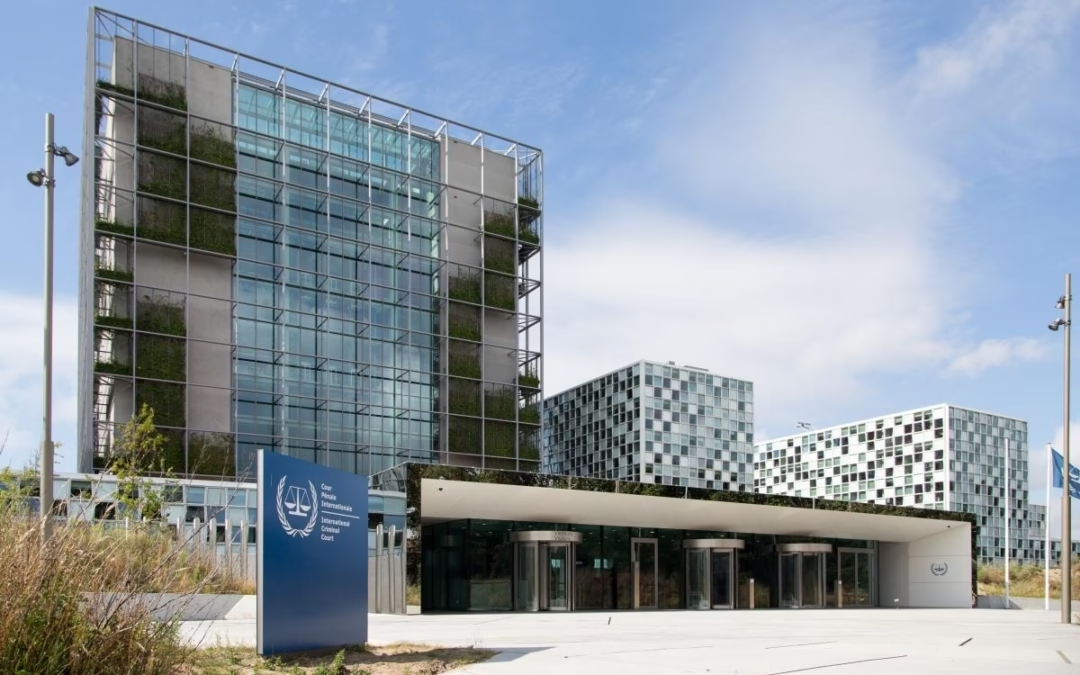
As the National Union of Peoples’ Lawyers gathers for its Seventh Congress, this work takes on a renewed urgency. From the defense of those arrested on September 21, to legal challenges against repression and corruption, to the pursuit of justice in international tribunals — the struggle continues. Seven Congresses strong, we carry forward this mandate: to use the law to challenge the status quo, confront power, and serve the people. ###
Reference:
Atty. Josalee S. Deinla
NUPL Secretary General
+639174316396