Press Statement
27 September 2026
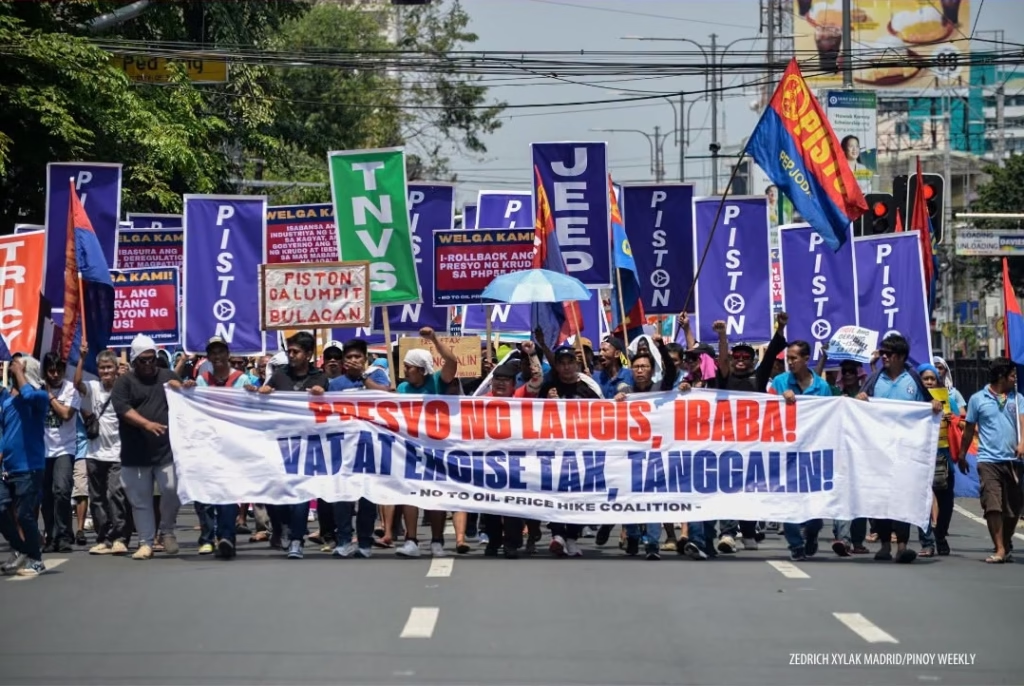
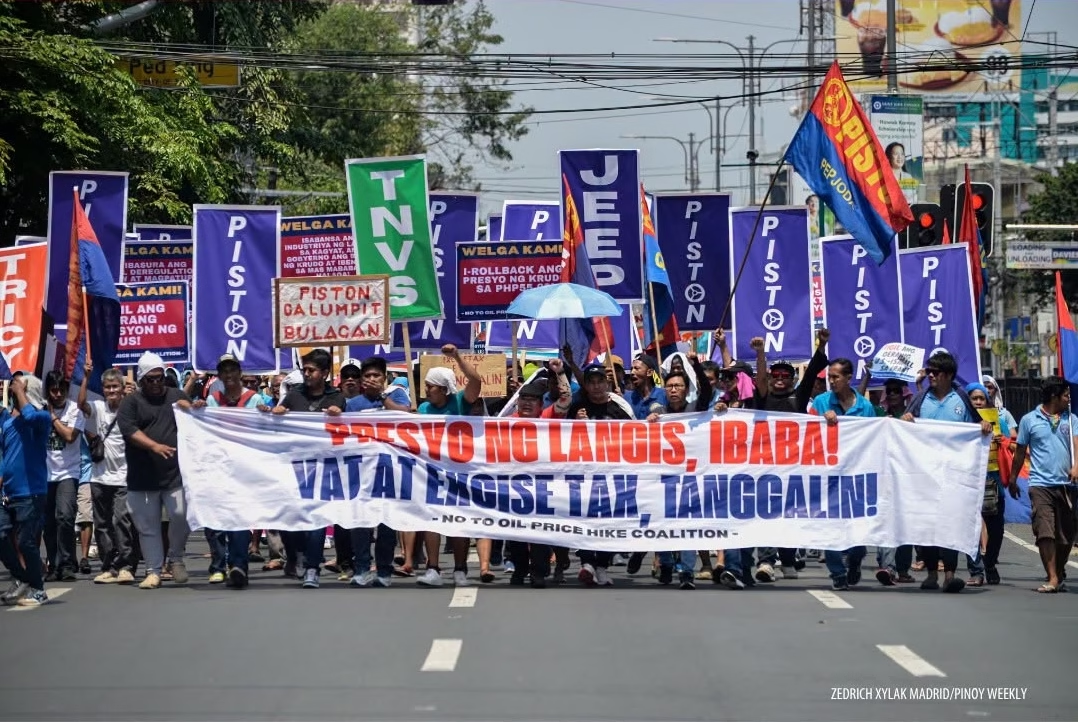
The National Union of Peoples’ Lawyers condemns the LTFRB’s threat to fine, suspend, or cancel the franchises of transport operators who join the impending transport strike.
Issued on the eve of collective action against soaring fuel prices, the warning is not a routine reminder of franchise obligations. It is a direct threat to operators’ livelihoods: join the protest, and risk losing the authority to operate.
The LTFRB has the power to regulate public transportation and enforce valid franchise conditions. But regulatory authority is not a license to suppress dissent. A certificate of public convenience imposes obligations to the riding public; it does not extinguish the constitutional freedoms of speech, peaceful assembly, association, and petition.
The LTFRB cannot use its regulatory powers to punish transport operators for exercising these freedoms. Participation in a peaceful transport strike is not, by itself, proof of abandonment, refusal to provide service, or any other franchise violation.
Nor may the LTFRB impose automatic, collective, or predetermined punishment. Before any sanction is imposed, the Board must establish an actual violation, identify the operator or units responsible, and provide each respondent with notice and a meaningful opportunity to be heard. A show-cause proceeding cannot be reduced to a formality after guilt has already been announced.
These safeguards are indispensable when the threatened penalties include suspension or cancellation of a franchise. The government cannot hold operators’ livelihoods hostage to their silence or use the threat of economic ruin to deter collective action against government policy.
In Philippine Blooming Mills Employment Organization v. Philippine Blooming Mills Co., the Supreme Court recognized the preferred position of the freedoms of expression, assembly, and petition. The State may regulate conduct to protect legitimate public interests, but it cannot impose sweeping threats of punishment to silence protest.
The government has a duty to protect commuters and ensure adequate transportation. It should meet that duty through lawful contingency measures, meaningful dialogue, and concrete action on the conditions driving transport workers and operators to protest—not by threatening their livelihoods.
We call on the LTFRB to withdraw its blanket threat against participants in the transport strike and to refrain from treating participation in peaceful protest as franchise violation. ###
📷 Photo credit: Pinoy Weekly