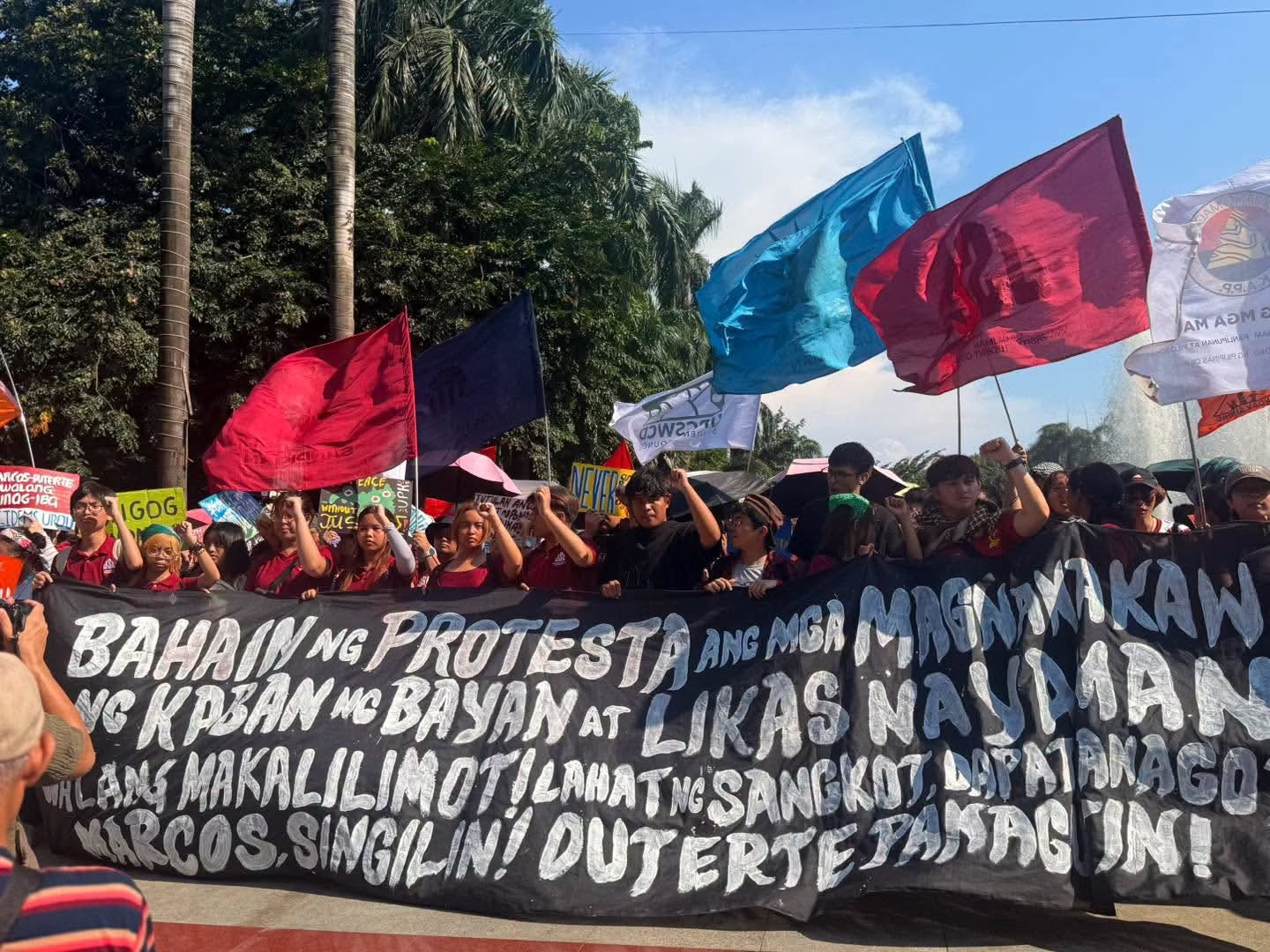
Free Speech Needs No Prior Approval: Dismantle the Legal Infrastructure of Repression
Press Statement
21 September 2026
Fifty-four years after the declaration of Martial Law, the shadow of authoritarianism persists through Batas Pambansa Blg. 880 (the Public Assembly Act of 1985). This dictatorship-era law places the constitutional right to collective action under a system of prior state approval.
BP 880 and the legal doctrines upholding it are not harmless administrative rules. In practice, they give public officials a legal weapon to block accountability and shield themselves from public outrage.
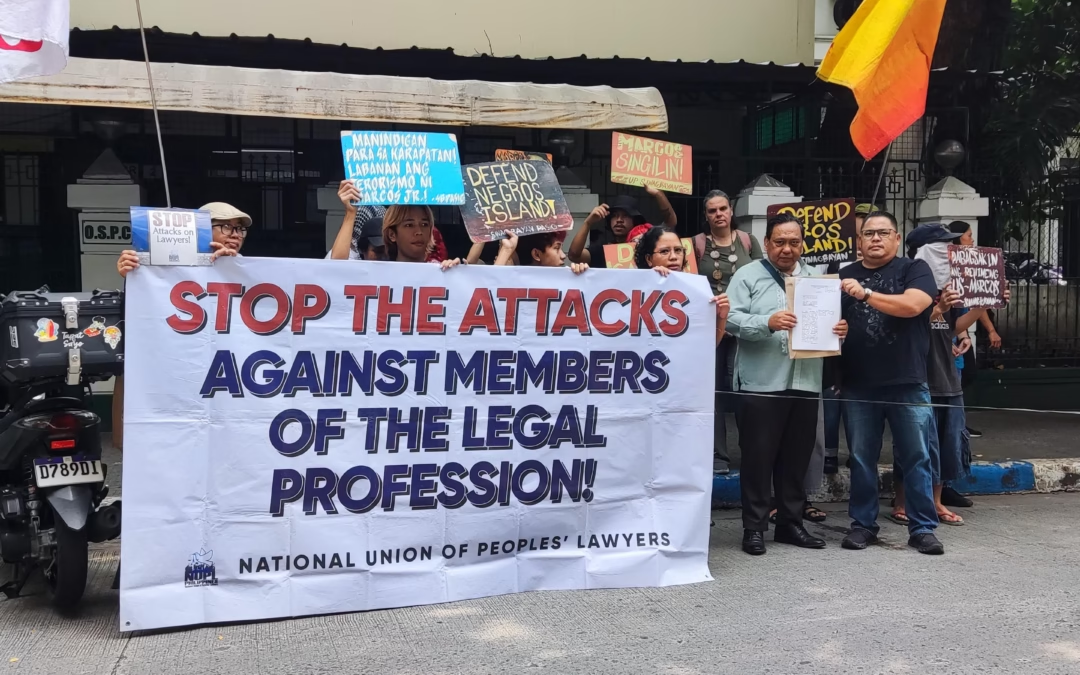
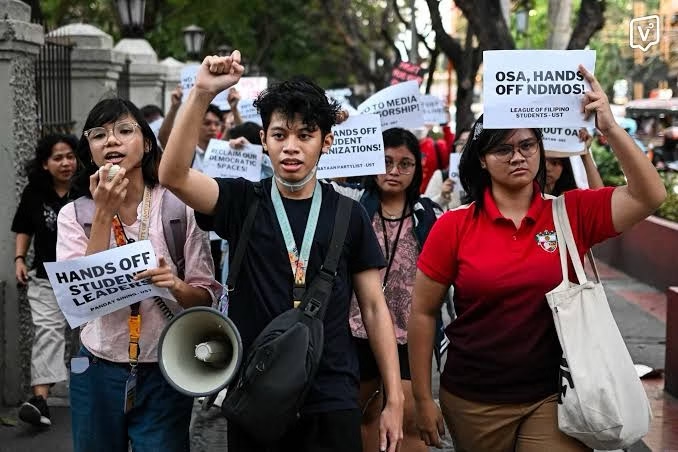
Citizens do not march on a whim. They gather out of necessity: to fight systemic corruption, resist state violence, demand a living wage, and protect our national patrimony—including our critical resources under Pax Silica—from foreign plunder. When the law treats free speech as a privilege dispensed by mayors and police, it insulates the government from matters of basic survival and human dignity.
This permit-centered framework is inherently flawed and fundamentally undemocratic for five key reasons:
- It operates as prior restraint. Under the guise of regulating time, place, and manner, the State must not require citizens to secure a mayor’s written permission to gather, criticize public officials, or demand accountability. The burden lies on the government to justify stopping a protest, while citizens should never have to justify holding one.
- It suppresses spontaneous dissent. BP 880’s mandated five-day advance permit application assumes that public indignation follows an official calendar. When sudden injustices occur, people must be free to respond immediately.
- “Freedom parks” isolate and sanitize the dissent. Confining protest to isolated, government-designated spaces neuters its impact. A picket outside an abusive agency or a march down a major thoroughfare carries meaning that an empty park cannot. In protest, the place is part of the message.
- It authorizes dispersal by paperwork. Section 12 of BP 880 allows police to break up peaceful assemblies purely for lacking a permit. Police intervention should be based on actual violence or imminent threats to public safety—never on a missing piece of paper.
- It criminalizes leadership. While protecting participants, the law targets protest organizers and leaders, threatening them with up to six months in prison for holding an unpermitted, yet peaceful, rally. This deters community leadership and penalizes democratic participation.
We therefore call on the legal community, civil society, and the public to remain vigilant. The moment BP 880 is used again to suppress a peaceful gathering or arrest organizers, we must stand ready to mount a renewed constitutional challenge. When a concrete case of abuse reaches the bench, we urge the Supreme Court to seize the opportunity to overturn Bayan v. Ermita, abandon the permit-centered framework under BP 880, and declare peaceful public assembly presumptively lawful.
We likewise demand that Congress repeal BP 880 outright, keeping in mind that the right to peaceably assemble is directly guaranteed by the Constitution and requires no statutory permission or state oversight.
Dissent is not a threat to democracy; it is its lifeblood. As we honor those who resisted the dictatorship, we must dismantle the legal infrastructure that carries its authoritarian habits into the present. ###
📷 Photo credit: Bulatlat