NUPL TO SECRETARY TEODORO: IF WE ARE “AT PEACE,” WHY DOES THE ARMED CONFLICT PERSIST
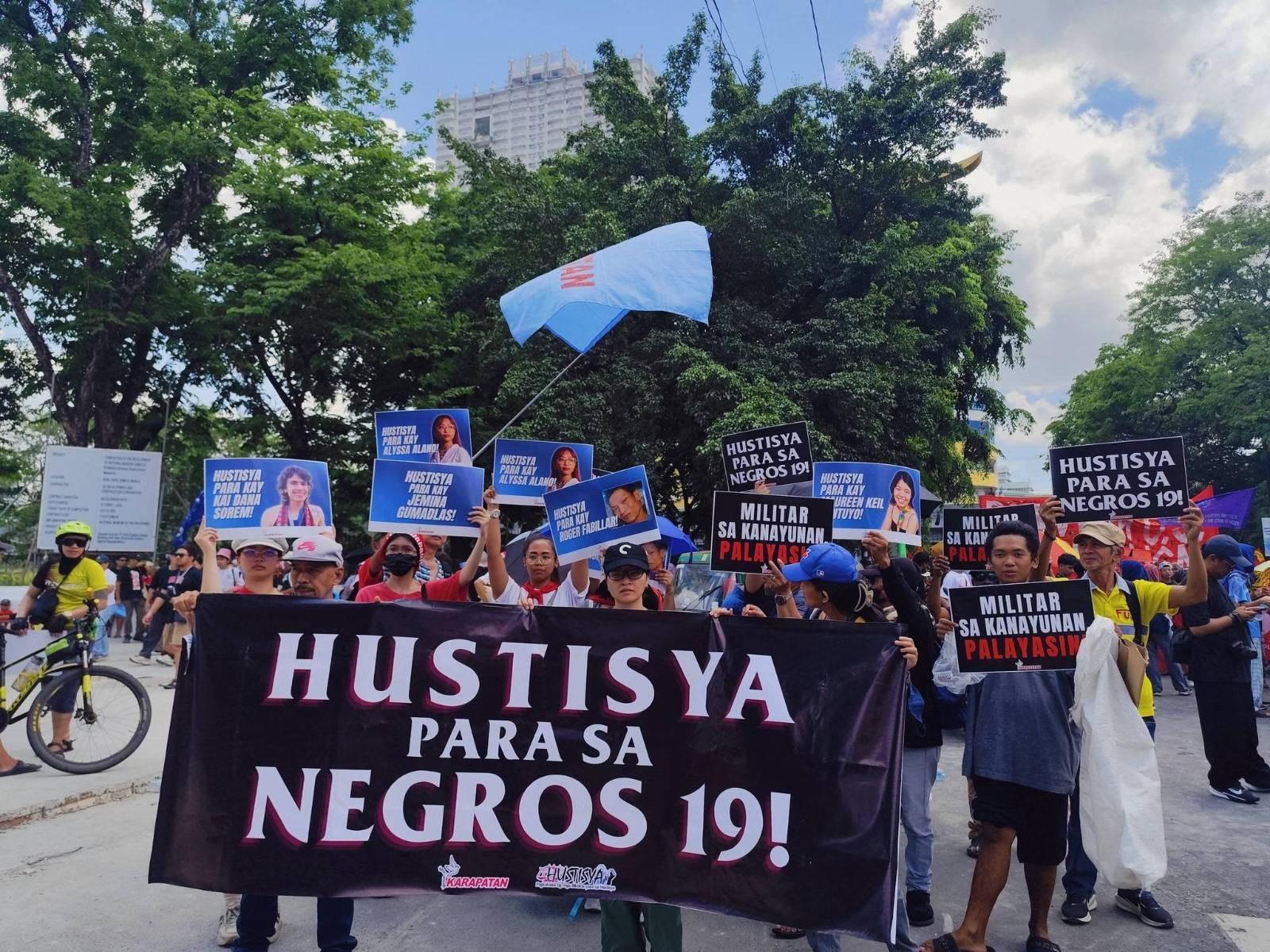
Regardless of whether peace talks resume, the GRP remains legally obligated under both domestic and international law to observe and respect international humanitarian law and human rights — and such obligations are legally demandable and enforceable. NUPL thus reiterates its call for full accountability for the Toboso killings.
May 4, 2026
The National Union of Peoples’ Lawyers is a nationwide voluntary association of human rights lawyers in the Philippines, committed to the defense, protection, and promotion of human rights, especially of the poor and the oppressed.

Press Statement
3 May 2026

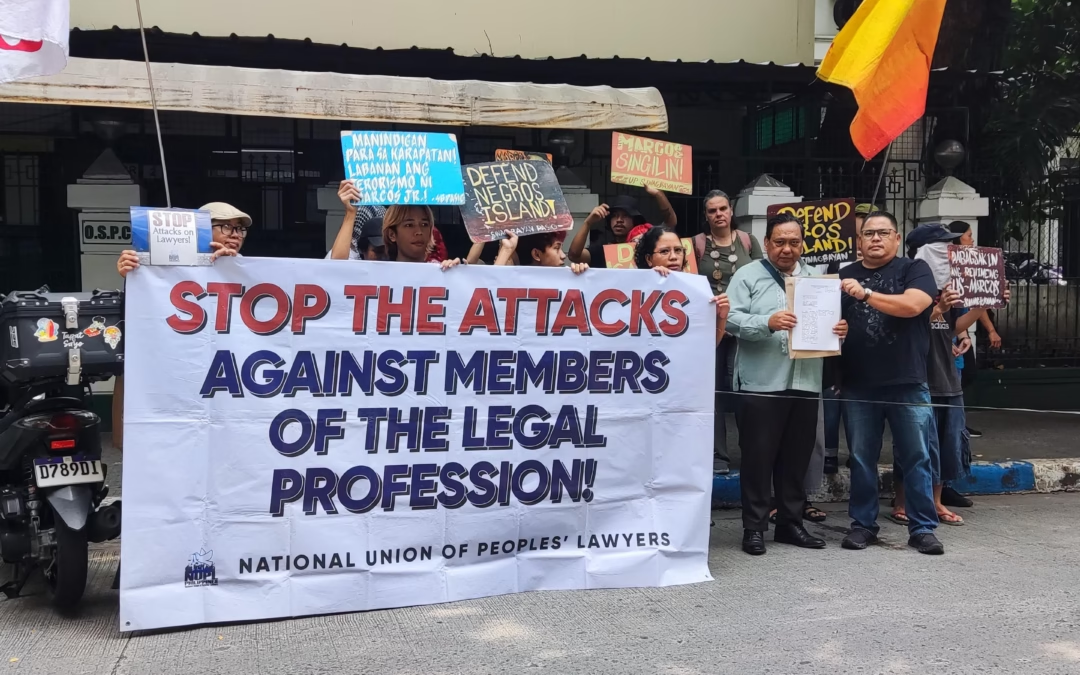
Defense Secretary Gilberto Teodoro Jr. dismissed renewed calls to resume GRP-NDFP negotiations, declaring: “The Filipinos are at peace. They are the ones disturbing the peace.” He denies the reality of communities living under sustained militarization and state violence recasting a protracted armed conflict merely as an internal security threat rather than a deep-seated social, economic, and political crisis requiring a negotiated settlement. In Negros, where peasants remain among the poorest in the country — dispossessed and exploited across generations — such a declaration is an insult to their reality.

The calls rejected by Teodoro came from former GRP peace negotiators — lawyers and civil society figures who sat across from the NDFP between 2014 and 2020. They warned that incidents like the Toboso killings further shrink what little room for dialogue remains, and urged the resumption of talks without preconditions. Teodoro responded by saying that to negotiate would be to “elevate the morality of their cause to something legitimate, which I cannot accept.”

Such a bellicose position not only obstructs the resolution of a decades-long armed conflict; it contradicts the Marcos administration’s own campaign for a Philippine seat on the UN Security Council. A government cannot credibly claim that it is a “voice for principled peace” and a “committed peacemaker” abroad while its defense chief forecloses every avenue for peace at home, not least while hosting the largest and most expansive Balikatan exercises in the country’s history.

Regardless of whether peace talks resume, the GRP remains legally obligated under both domestic and international law to observe and respect international humanitarian law and human rights — and such obligations are legally demandable and enforceable. NUPL thus reiterates its call for full accountability for the Toboso killings. ###
Read more

Four UST students appeal sanctions over PAF exhibit: NUPL and PILC ask Rector to stay penalties and reverse OSA resolutions

Four UST students appeal sanctions over PAF exhibit: NUPL and PILC ask Rector to stay penalties and reverse OSA resolutions

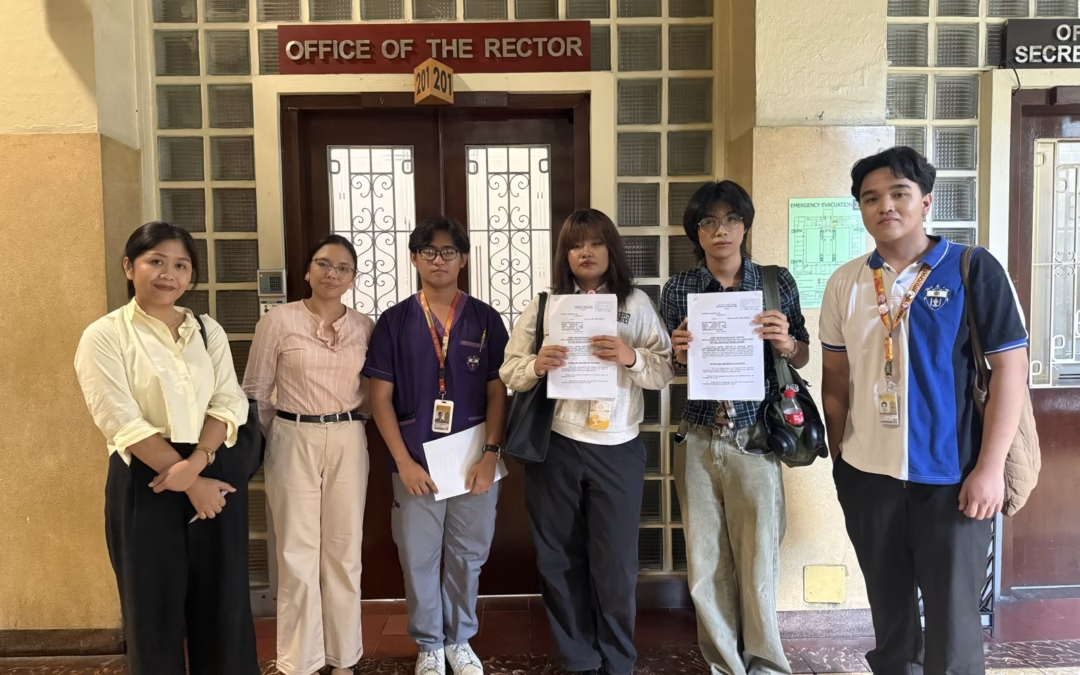
Raven Kristine Racelis, Ralph Christian Manuel, Mecaella Sean Carl Capalar, and Dex Anderson Frogoso, represented by the National Union of Peoples’ Lawyers (NUPL) and the Public Interest Law Center (PILC), asked the Office of the Rector to reverse and set aside the separate resolutions issued by the UST Office for Student Affairs on October 2. They also sought an urgent stay of their suspensions and all related sanctions while the appeal is pending.

NUPL seeks to keep Gorgonio amparo case in Manila

NUPL seeks to keep Gorgonio amparo case in Manila

NUPL President Atty. Ephraim Cortez speaks outside the Court of Appeals on September 29, 2026, following the filing of a motion seeking reconsideration of the transfer to Cebu of the amparo and habeas data proceedings involving NUPL–Negros Chairperson Atty. Rey Gorgonio and three development workers of the Paghida-et sa Kauswagan Development Group (PDG).

US sanctions against the ICC: Imperial power in the service of impunity

US sanctions against the ICC: Imperial power in the service of impunity

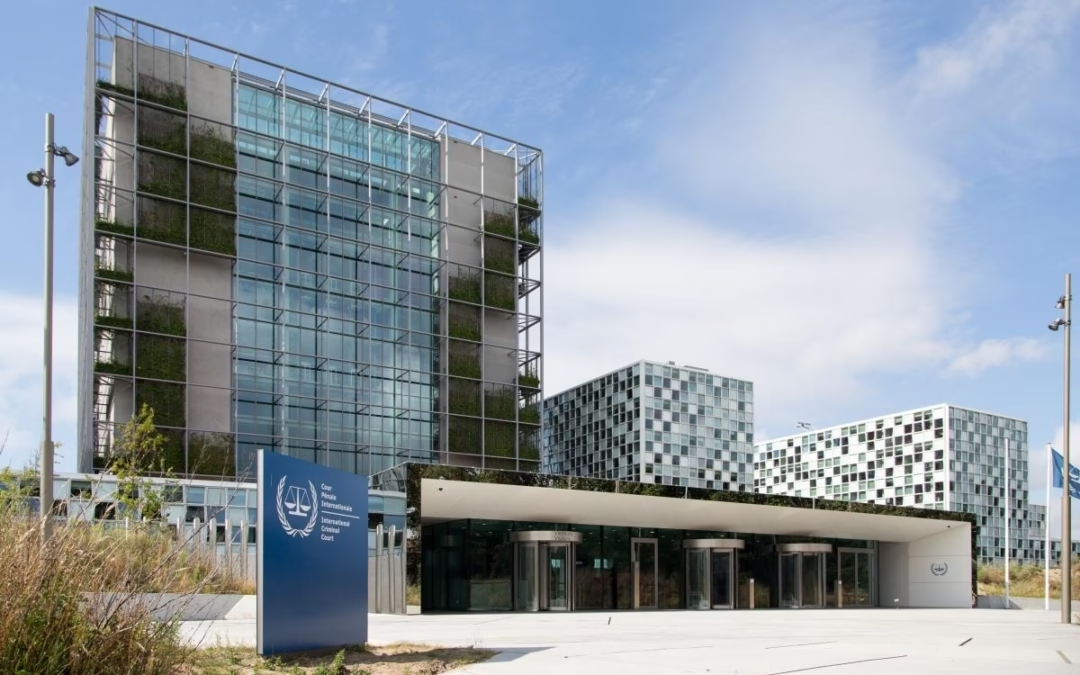
Under Trump’s Executive Order No. 14203, the designation subjects the ICC to US financial sanctions that threaten to restrict its access to American banks, technology, and other essential services. Given the United States’ influence over the global financial system, these restrictions could disrupt the Court’s operations, including investigations, witness protection, and even the delivery of assistance and reparations to victims.

PAF’s Thin Skin Is No Ground for Punishing Student Dissent

PAF’s Thin Skin Is No Ground for Punishing Student Dissent

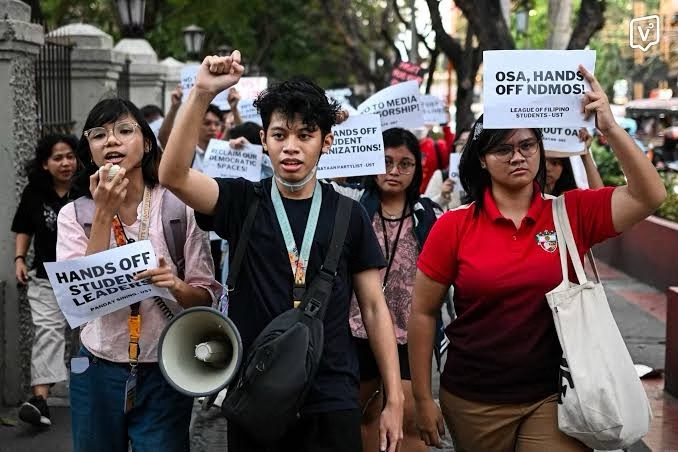
The Philippine Air Force has no problem displaying weapons on a university campus, yet apparently cannot stomach sharp questions protests from students about military operations and civilian casualties. Even the University of Santo Tomas (UST) disciplinary resolution notes that PAF personnel themselves considered the students’ questions valid. What offended them, it seems, was the students’ supposedly rude manner.

Share This