Press Statement
January 22, 2026
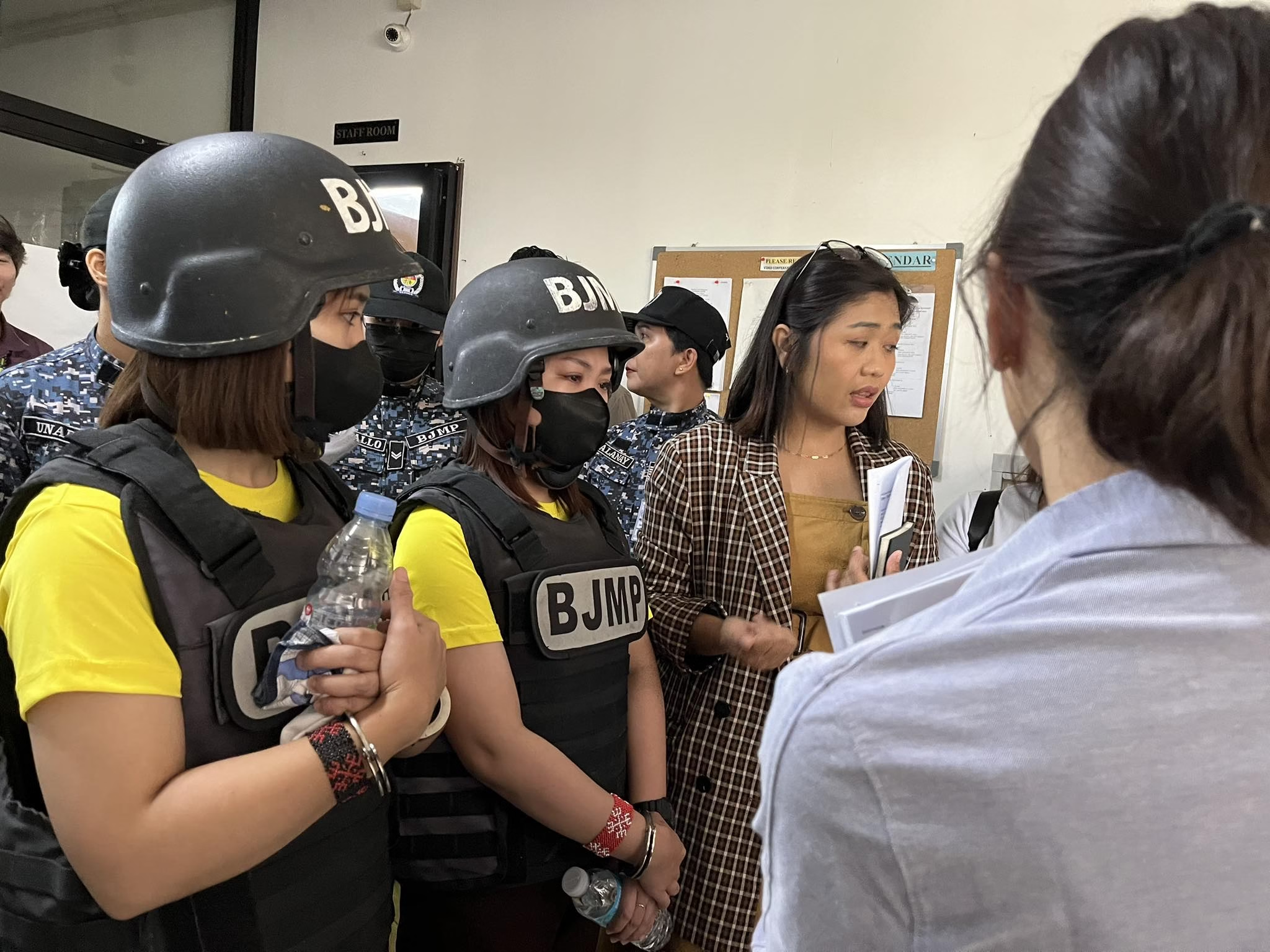
The National Union of Peoples’ Lawyers (NUPL) expresses grave concern over the judgment promulgated today by the Regional Trial Court of Tacloban City, which while acquitting Frenchie Mae Cumpio and Marielle Domequil of the charges of illegal possession of firearms, ammunition, and explosives, convicted them of financing terrorism.
From our perspective of the facts, evidence and law, we maintain that Frenchie Mae and Marielle are innocent and we will assail the conviction through the appropriate legal remedies.
This conviction is especially disturbing in light of established judicial findings in related proceedings. In a separate case, the Court of Appeals categorically ruled that there was no legal or factual basis to forfeit the money seized from Frenchie and Marielle, funds that the State had claimed were connected to terrorism financing. The appellate court expressly cautioned against the hasty labeling of human rights advocates as terrorists and emphasized that due process cannot be set aside in the name of national security. That ruling directly undermines the narrative used to justify the terrorism financing charge and raises serious questions about the basis of the terrorism financing charge.
This and similar cases thus demonstrate how counter-terrorism laws can be stretched and weaponized to criminalize lawful, civilian work—turning journalism, humanitarian work, and advocacy into alleged acts of terrorism financing. From this injustice flow the grave implications that cannot be ignored.
For human rights defenders, humanitarian and religious workers, development NGO personnel, journalists, and community organizers, the unmistakable message is that legitimate social engagement and protected civic activity may be recast by the State as terrorism financing through broad and elastic standards untethered from real acts of terrorism. This shows how terror laws in the Philippines, by their nature and design, chill speech, deter association, and shrink civic space.
As terrorism financing cases continue to be filed and pursued, many individuals and organizations remain trapped in prolonged detention or legal uncertainty, subjected to financial repression through freeze orders and civil forfeiture proceedings, and publicly branded as security threats long before any final determination of guilt. Even when courts later reverse or dismiss these legal actions, the punishment has already been inflicted and the damage irreparable.
This conviction, with due respect, therefore demands the highest level of public scrutiny. What is at stake is not only the liberty of Frenchie Mae Cumpio and Marielle Domequil, but the safety of civil society actors whose work depends on the freedom to speak, associate, and serve without fear of criminalization.
NUPL is making a full study of the decision. At this point, we are focused on preparing and immediately pursuing all remedies available to overturn this conviction and to protect the rights, liberty, and welfare of Frenchie Mae Cumpio and Marielle Domequil. ###
Reference:
Atty. Josalee S. Deinla
NUPL Secretary General
+639174316396
*Photo by Bulatlat