Press Statement
6 May 2026
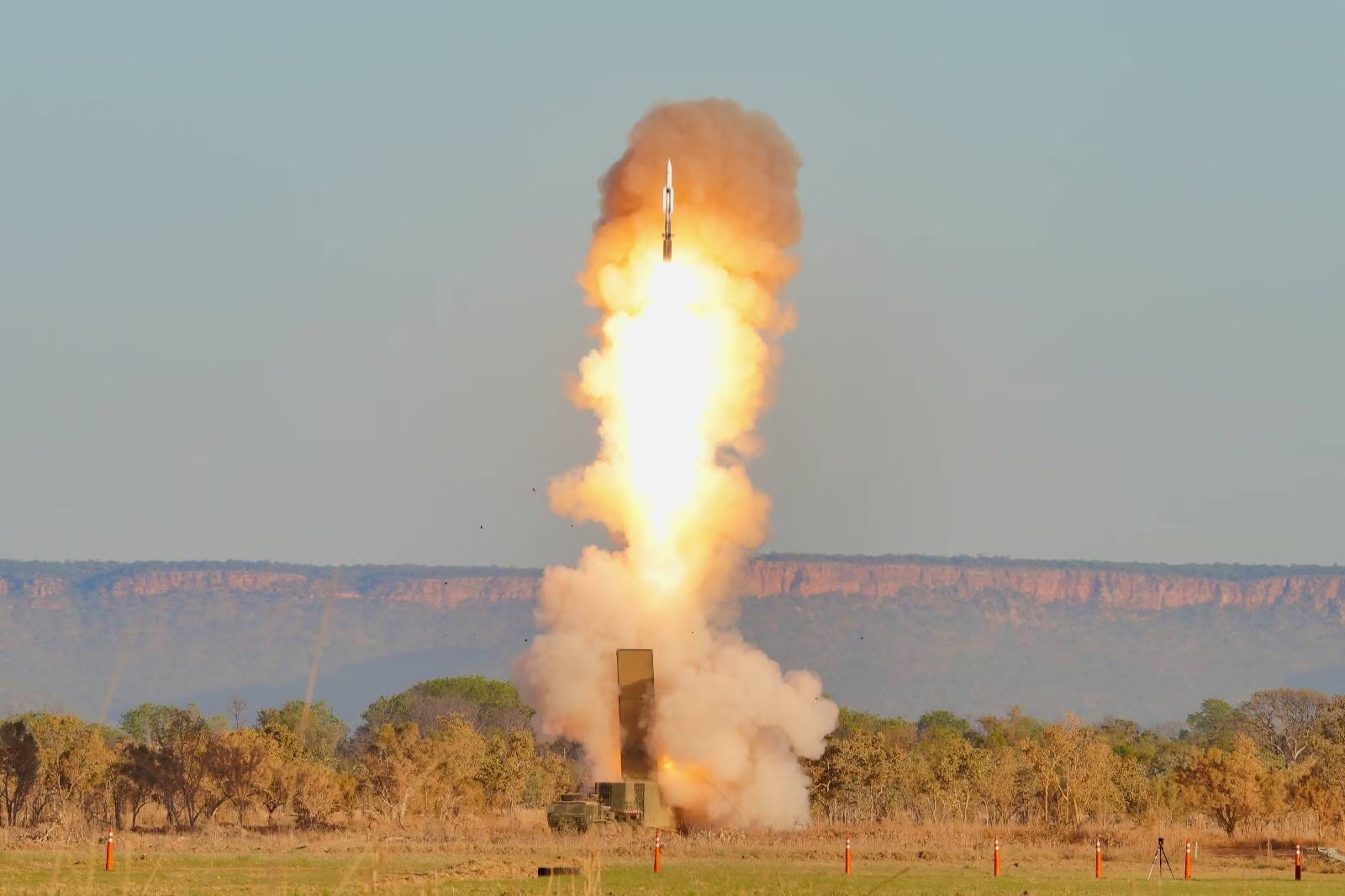
The National Union of Peoples’ Lawyers condemns the launch of a Tomahawk cruise missile by the United States military in the early hours of 5 May 2026 from its Typhon Mid-Range Capability system stationed at Tacloban Airport—a civilian facility. The missile traveled more than 630 kilometers across Philippine airspace before striking a target inside Fort Magsaysay in Laur, Nueva Ecija.
That the missile reportedly carried an inert payload does not lessen the gravity of the incident. The Typhon system is a fully operational weapons platform designed to launch Tomahawk cruise missiles—armed with up to 450 to 510 pounds of high explosives and capable of striking targets with precision. The only difference between this test and an actual attack is the payload. What was demonstrated was not only the system’s readiness and reach, but also a troubling precedent: that Philippine territory can be used to project foreign military power.
The legal consequences are equally grave. Under international humanitarian law, civilian objects are protected from attack unless—and for such time as—they are used in a way that effectively contributes to military action and their destruction offers a definite military advantage. The Marcos administration has placed a critical civilian infrastructure, and the people who depend on it, within the legal crosshairs of future targeting determinations in a region where armed conflict is neither unthinkable nor unprovoked. Should hostilities erupt, Tacloban Airport’s prior use as a missile launch platform would factor into targeting assessments under the laws of armed conflict, placing civilians at risk in a war they did not choose.
This incident stems directly from the Enhanced Defense Cooperation Agreement — an executive arrangement that, as we have argued before the Supreme Court, stands in clear contradiction to the constitutional principles that the Philippines renounces war as an instrument of national policy and upholds an independent foreign policy grounded in sovereignty. The Filipino people alone, who were neither informed nor gave their consent, will bear the risks.
NUPL demands the immediate suspension of Balikatan 41-2026; full public disclosure of the legal basis for the deployment and operational use of the Typhon system; a Senate inquiry into the constitutional implications of this launch; and a comprehensive review of EDCA with a view to its abrogation.
The Philippines is not a testing ground for foreign weapons. It will not be a launchpad for war. ###
Reference:
Atty. Ephraim B. Cortez
NUPL President
+639172092943
Photo credit: Defense News