July 3, 2025
Five years since the enactment of the Anti-Terrorism Act of 2020 (ATA) and over a decade since the passage of the Terrorism Financing Prevention and Suppression Act of 2012 (TFPSA), the Philippine government has proven what civil society warned all along: that these laws were not intended to protect the people, but to punish those who stand with them.
Passed under the guise of national security, the ATA and TFPSA have institutionalized a legal regime in which dissent, humanitarian work, and armed conflict are wrongfully conflated with terrorism. These laws have created the legal cover for surveillance, harassment, arbitrary arrests, and financial sanctions.
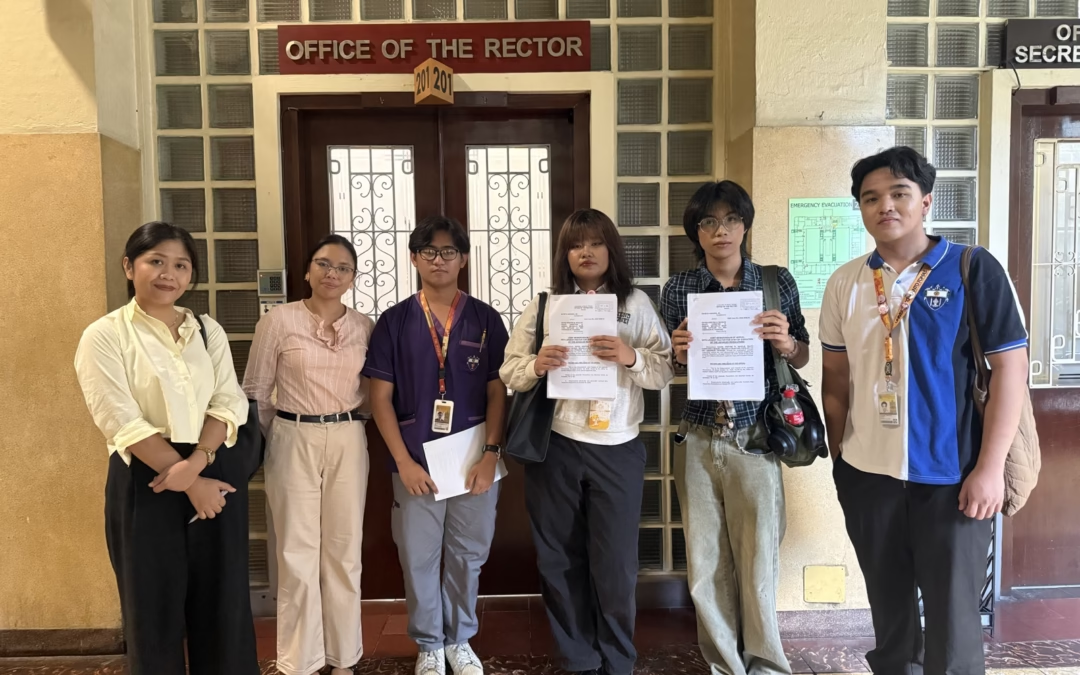
In Southern Tagalog, young rights defender Fritz Jay Labiano and Adrian Paul Tagle were indicted for terrorism financing after providing basic support to a political prisoner facing a charge of terrorism. The case was dismissed, but not before the law was used to send a chilling message: giving aid those the state vilifies is itself a punishable act. Similarly, Hailey Pecayo, John Peter Angelo Garcia, Kenneth Rementilla, and Jasmin Rubia faced complaints of terrorism for merely attending the wake of a child killed by the military during an operation. Indigenous defenders of the Cordillera Peoples Alliance, designated as terrorists without due process, have been dragged into secret proceedings and stripped of the most basic procedural rights.
The financial machinery of repression has proven equally devastating. The Rural Missionaries of the Philippines saw decades of development work dismantled after their accounts were frozen—based solely on fabricated testimonies from military assets. The Leyte Center for Development, internationally recognized for its disaster response, suffered a similar fate. Its executive director, Jazmin Aguisanda Jerusalem—like many development workers across the country—now faces trumped-up charges of terrorism financing and the freezing of both personal and family accounts, built on a familiar pattern of perjured and recycled narratives. In Tacloban, community journalist Frenchie Mae Cumpio and lay worker Mariel Domequil remain on trial after a raid involving planted evidence and the seizure, freezing, and forfeiture of humanitarian funds.
These cases are not exceptions or instances of mere abuse or misuse of counterterrorism laws. They are evidence of how the ATA and the TFPSA have enabled a system in which law is no longer a restraint on arbitrary power, but its most efficient instrument.
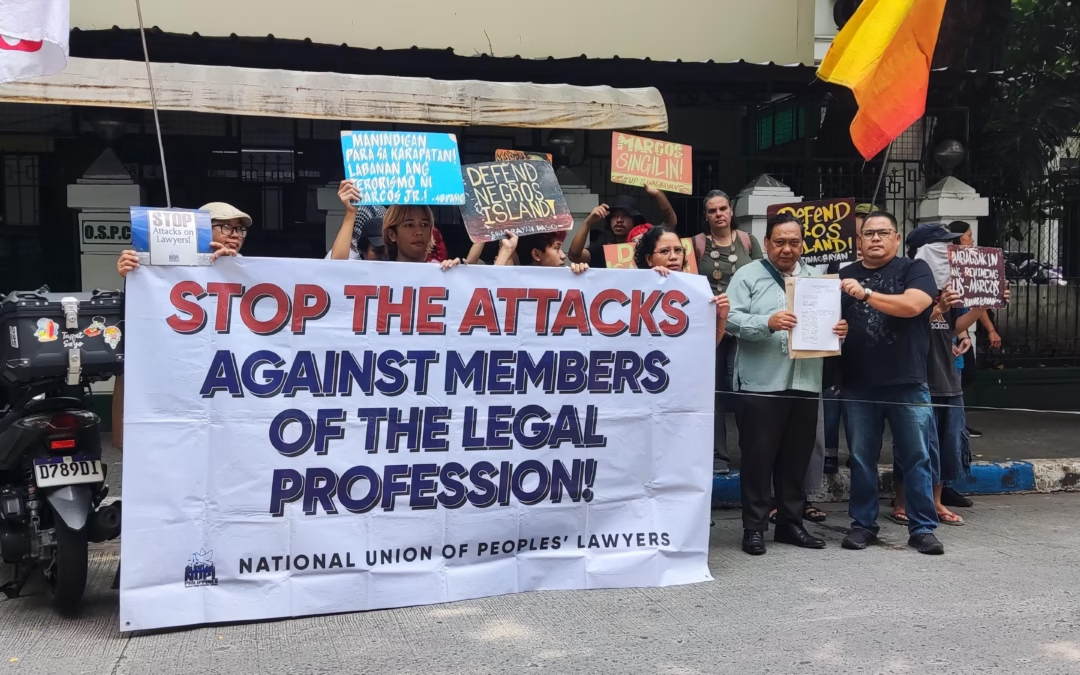
These conclusions are drawn from the National Union of Peoples’ Lawyers’ direct and sustained engagement over the past five years. As counsel to those wrongfully charged, detained, or harassed under these laws, NUPL has witnessed firsthand the human cost of this legal repression. In doing so, its own lawyers have become targets of relentless surveillance, threats, and red-tagging for simply performing their professional and ethical duties.
The NUPL renews its call for the immediate repeal of these laws. Their continued enforcement safeguards not security, but legitimizes state repression. As long as these laws exist, rights defenders, activists, journalists, and humanitarian workers will remain at risk—not because they have broken the law, but because they challenge the conditions of injustice that the law now seeks to protect.
Reference:
Atty. Josalee S. Deinla
Secretary General, NUPL
+63 917 431 6396