One law for the poor, another for the powerful
It is not disorder or damage to property that most endangers society, but the daily violence of hunger, corruption, and repression. It is the poor who are punished swiftly and harshly, while those truly responsible for the country’s decay are shielded from accountability.
September 26, 2025
The National Union of Peoples’ Lawyers is a nationwide voluntary association of human rights lawyers in the Philippines, committed to the defense, protection, and promotion of human rights, especially of the poor and the oppressed.

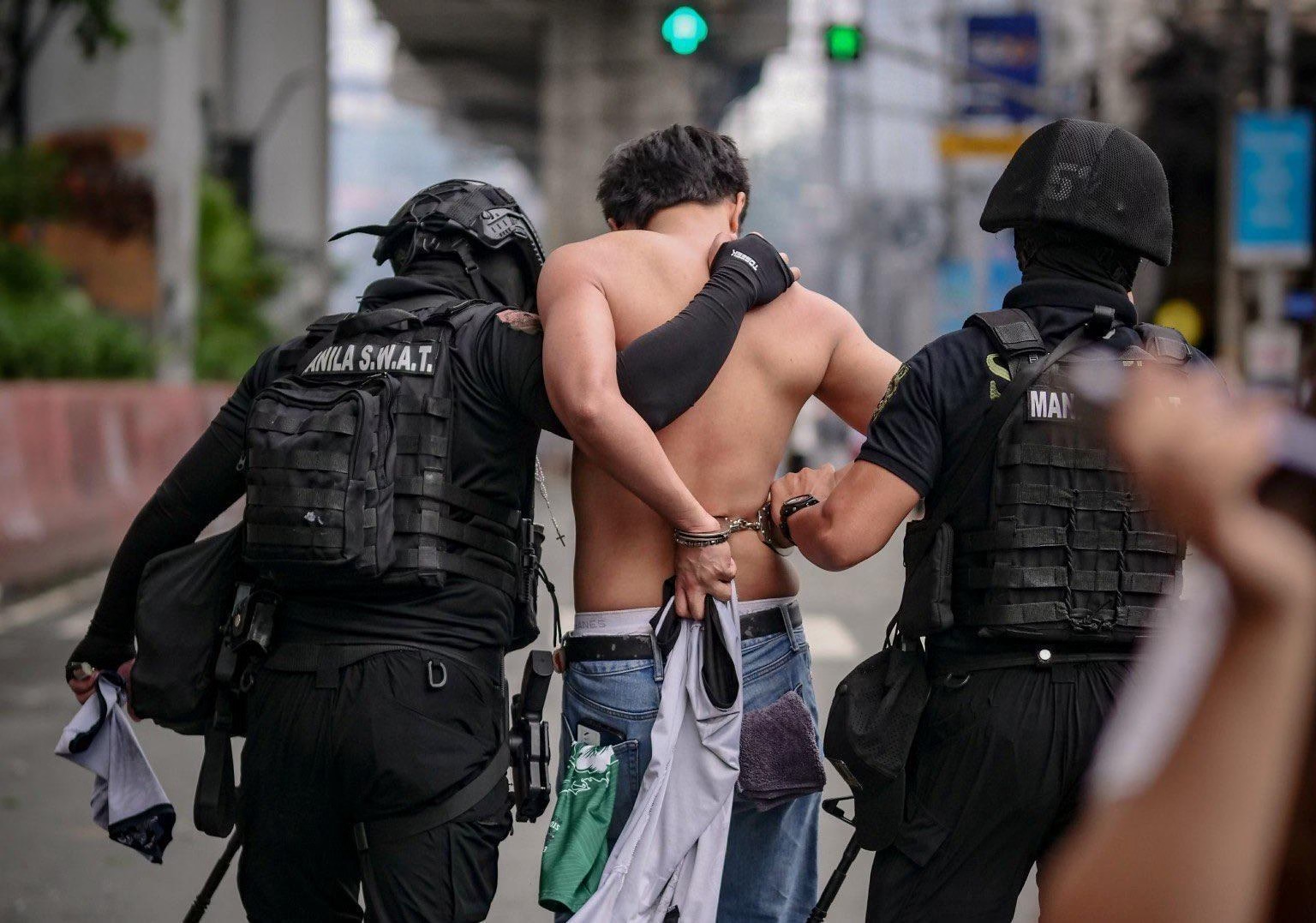
The events of September 21 once more exposed the double standards that govern law enforcement in this country. More than 216 people were arrested, among them 91 minors. They were beaten, detained in squalid conditions. Some are accused of joining scuffles, but many were simply protesters and bystanders caught in the sweep. They now face charges for various tumults and disturbances and damage to property.

It is telling that the full force of the law is wielded by “Manila’s finest” in defense of private property, while violations of human rights, even by state agents, are whitewashed. In this society, a broken window is punished more swiftly than the beating of a child.

Such severity is reserved only for the poor. When the powerful are implicated in corruption and human rights abuse, the response could not be more different: investigations that drag on indefinitely, shifting of blame, or complete silence. Extrajudicial killings remain unpunished while political dynasties implicated in corruption return to office as if nothing happened.

This disparity has long been the rule. The same authorities that jail children for shouting slogans bends over backward to excuse those with money and influence. The same system that rushes to file charges against protesters has yet to hold accountable those responsible for plunder or the loss of billions in public funds.

It is not disorder or damage to property that most endangers society, but the daily violence of hunger, corruption, and repression. It is the poor who are punished swiftly and harshly, while those truly responsible for the country’s decay are shielded from accountability.

Law, if it is to mean anything, cannot be selective. Until these double standards end, its promise of justice will remain hollow.

Reference:

Atty. Josalee S. Deinla
NUPL Secretary General
+639174316396
Read more

In the Service of the Filipino People

In the Service of the Filipino People

NUPL Vice President Atty. Angelo Karlo Guillen and Secretary General Atty. Josa Deinla with lawyers from the Kennedy Human Rights Center and Kerry Kennedy at the Capitol in Washington D.C.

Philippine Defeat in UN Security Council Bid Shows Human Rights Record Cannot Be Ignored

Philippine Defeat in UN Security Council Bid Shows Human Rights Record Cannot Be Ignored

The Philippine government finds paths only to new methods of repression and enforces the peace of the grave at home. Human rights monitors, including Karapatan, document a continuing pattern of violence: extrajudicial killings, enforced disappearances, arbitrary arrests, and widespread attacks on rural communities. On April 19, state forces killed 19 people in Toboso, Negros Occidental, including civilians standing in solidarity with farmers asserting their land rights.

On the Denial of the Petition Challenging the Terrorist Designation of Cordillera Peoples Alliance Leaders and the Constitutionality of the Anti-Terrorism Act

On the Denial of the Petition Challenging the Terrorist Designation of Cordillera Peoples Alliance Leaders and the Constitutionality of the Anti-Terrorism Act

The petitioners, all respected advocates for indigenous peoples’ rights and self-determination, sought judicial review of their designation as terrorists by the Anti-Terrorism Council (ATC) in 2023. Their petition constituted the first—and, to our knowledge, remains the only—as-applied constitutional challenge to the ATC’s power to designate individuals and organizations as terrorists under the Anti-Terrorism Act of 2020.

Share This