The Philippines is Not a Missile Range
The Philippines is not a testing ground for foreign weapons. It will not be a launchpad for war.
Regardless of whether peace talks resume, the GRP remains legally obligated under both domestic and international law to observe and respect international humanitarian law and human rights — and such obligations are legally demandable and enforceable. NUPL thus reiterates its call for full accountability for the Toboso killings.
We call for a truly independent investigation into the April 19 killings in Toboso with full and unimpeded access for humanitarian workers, independent human rights experts, and the families of the dead. We call for accountability — not just for those who pulled the trigger, but for those who ordered, tolerated, and concealed the killings. We call on the international community to monitor this case closely, as it is not an isolated incident but part of a continuing pattern of IHL violations across the Philippine countryside.
A city does not become safer by humiliating poor residents in mass operations over minor ordinance violations. Public order cannot be enforced by stretching local ordinances beyond their terms, bypassing constitutional limits, or treating poverty itself as suspicious.
There can be no genuine equality while women remain targets of abuse, exploitation, and contempt, and while poor and working women continue to suffer the combined violence of patriarchy and economic oppression. To defend women’s rights is to fight misogyny in all its forms, demand accountability from those who perpetuate it, and challenge the social order that keeps women vulnerable, silenced, and exploited.
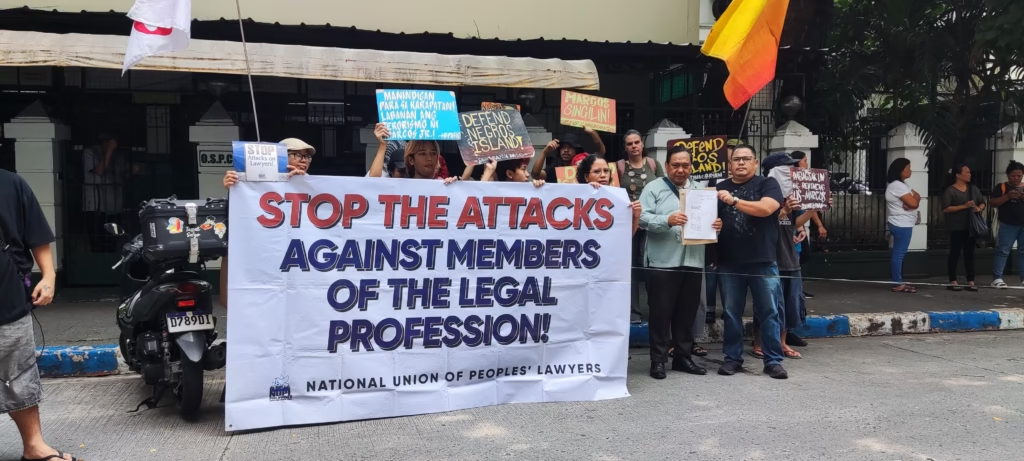
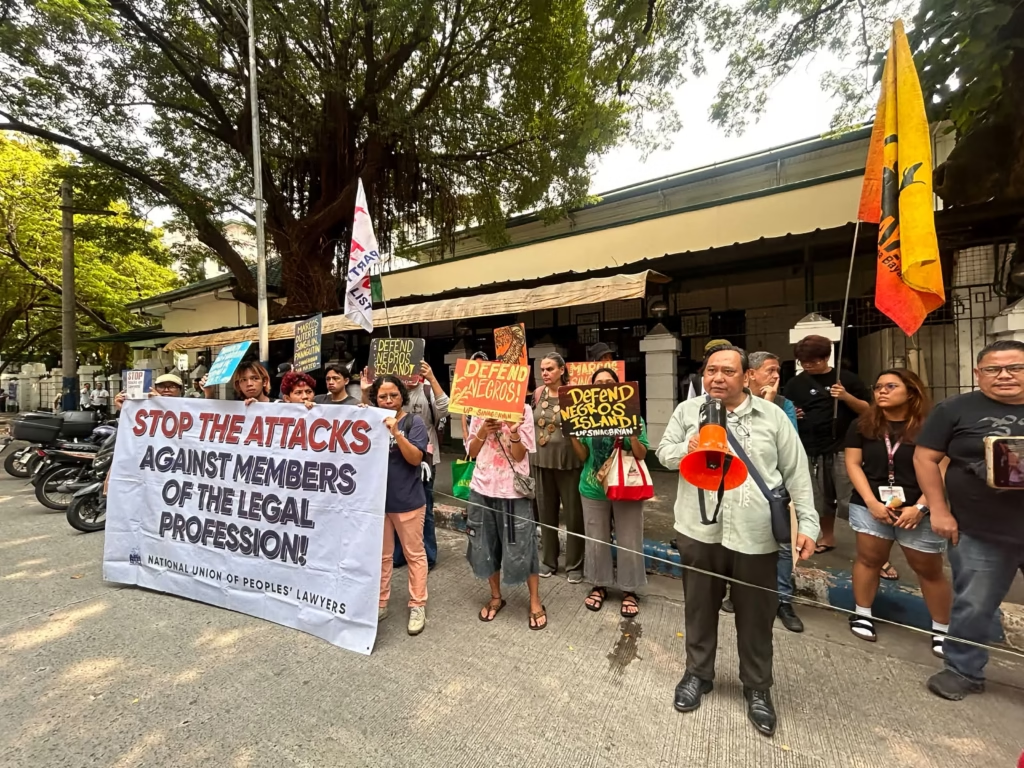
NUPL urged the Supreme Court to consider safeguards that protect lawyers and litigants and keep court processes safe, including convening a dialogue on effective protective mechanisms, issuing guidance when red-tagging and guilt-by-association narratives surface in court proceedings, and adopting clear protocols for responding to credible threats against counsel.
The enduring significance of EDSA rests on a simple truth: public spaces belong to the people. They must remain open as platforms for public discourse—robust, uninhibited, and free from the chilling effect of threats of dispersal or prosecution under a statute born of martial rule. EDSA stands as the people’s forum when they demand accountability and seek the fulfillment of the promise of People Power.
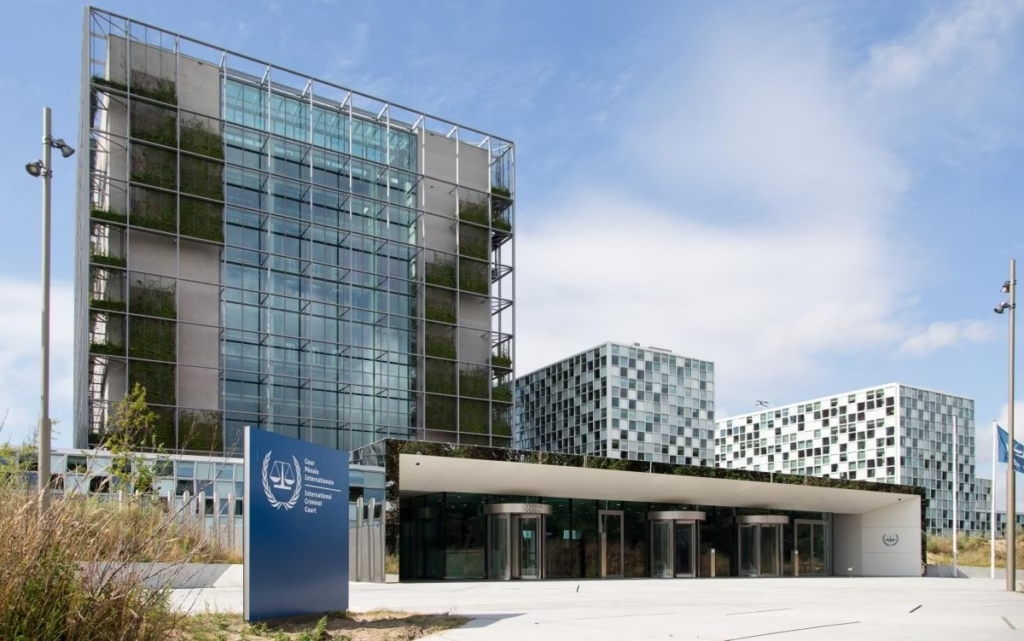
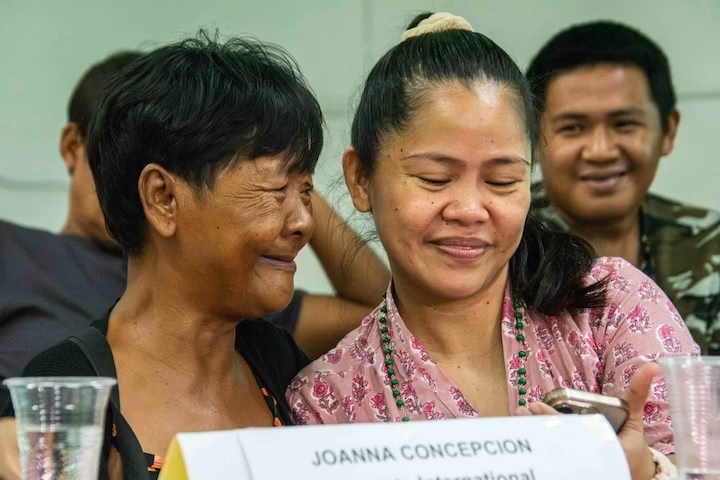
The hearings this week and the eventual trial are important for all Filipinos, as a way of composing a true and correct collective memory, and preserving a historical record of what should not be repeated again. The confirmation hearing is so important that victims and their lawyers, supporters, and advocates have travelled all the way to The Hague to be present during the hearings. We remain committed to seeking truth and justice for victims and for all people.
We reiterate that the weaponization of terror laws and financial sanctions as tools of repression, even under the pretext of complying with Financial Action Task Force recommendations, has no place in a democratic society.
The temporary suspension of Woggle’s permit should prompt a reckoning within the MGB through a transparent resolution of the petition and a serious examination of how a permit so plainly at odds with community opposition and ecological realities was issued at all.